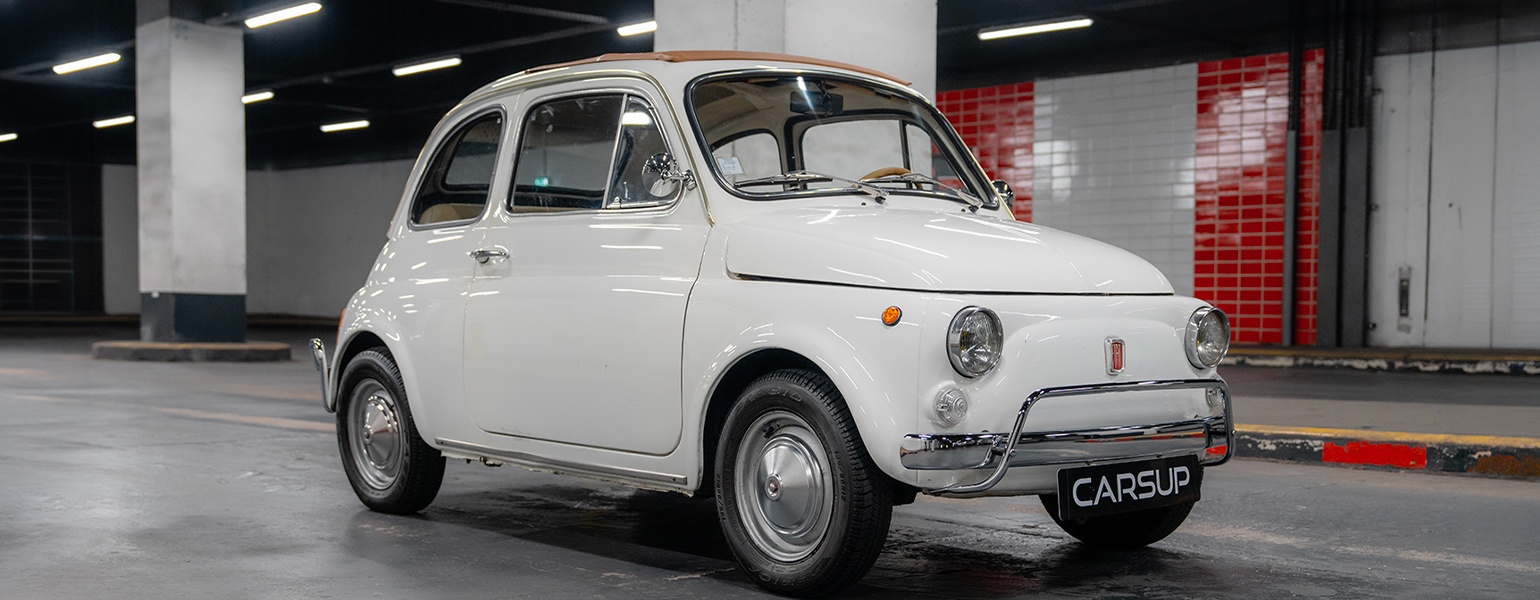
Fiat 500 1 - 1971
Mileage: {car-mileage} km
Energy: {car-fuel}
City: {car-city}, {car-country}
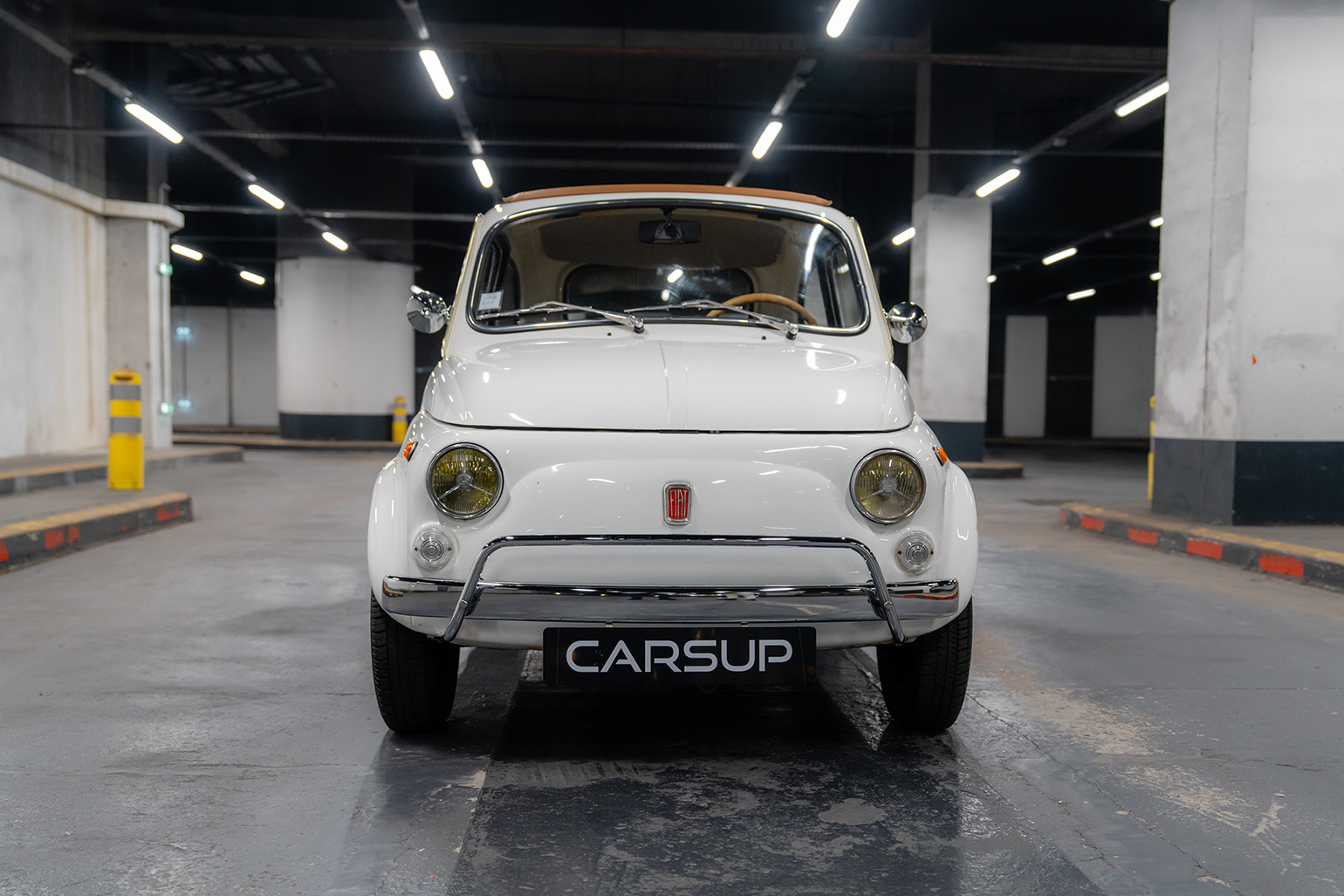
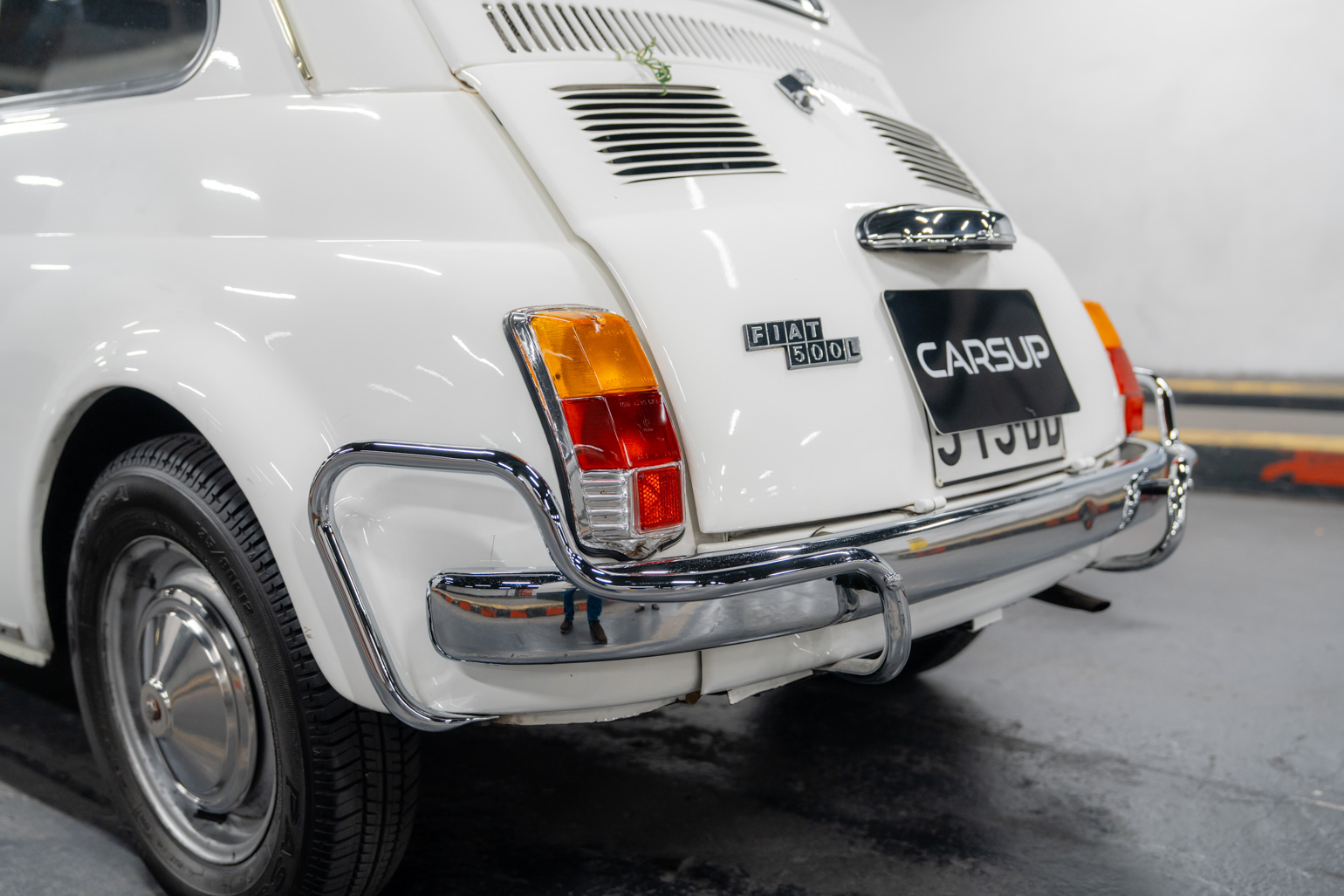
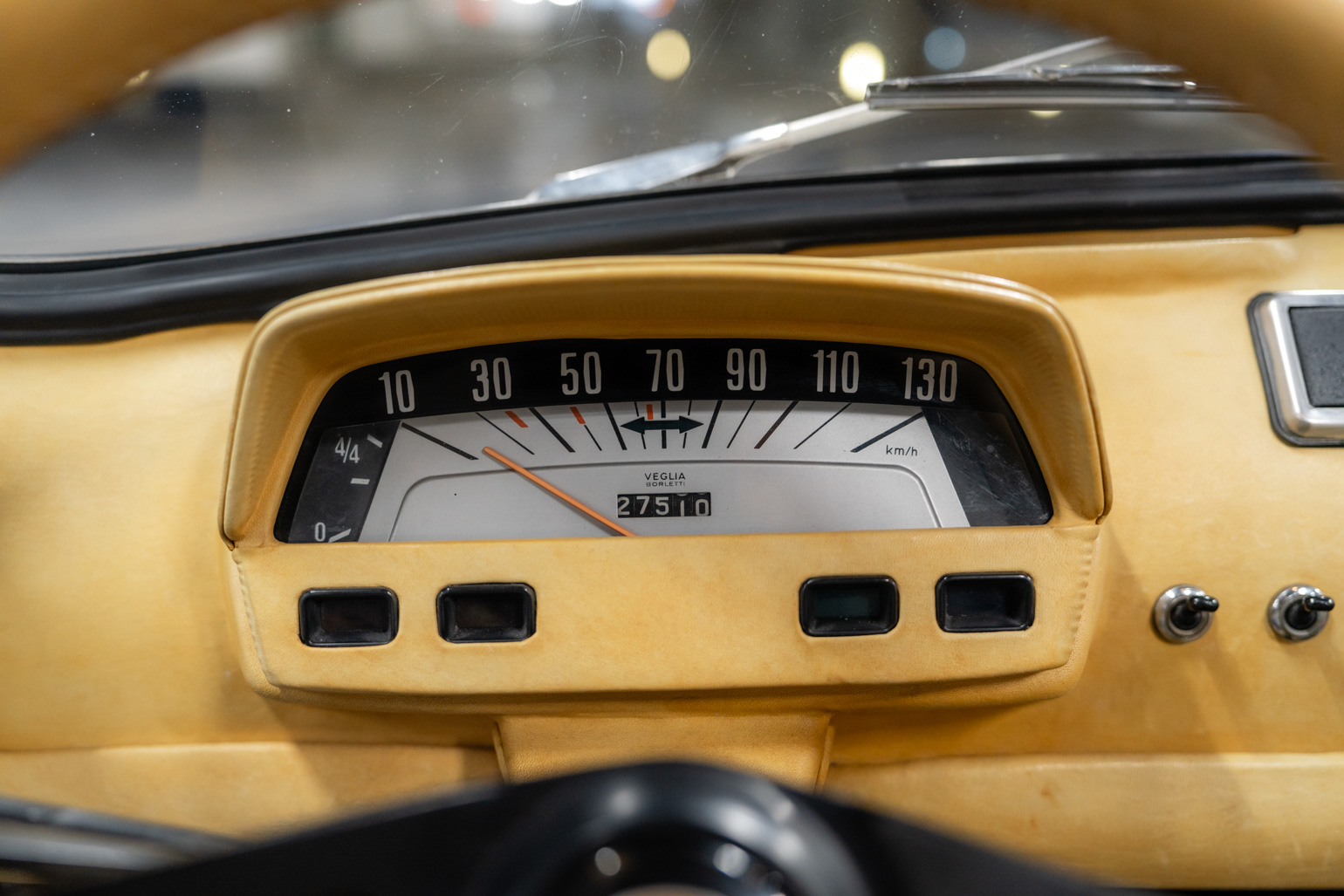
Our Fiat 500 F, first registered on 10 July 1971, currently has 30,000 km on the clock. It is currently registered in France and has been owned by its current owner since 2023.
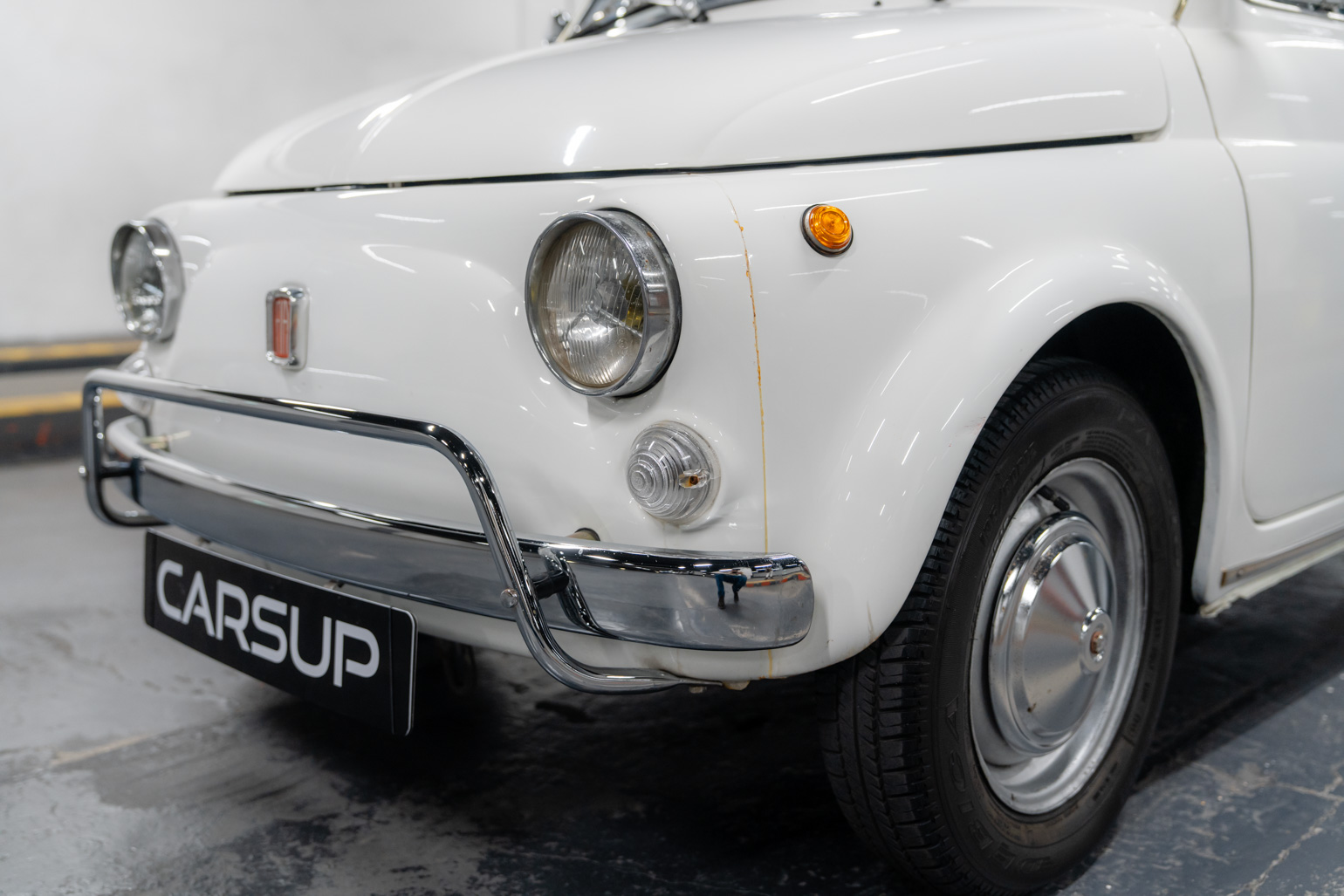
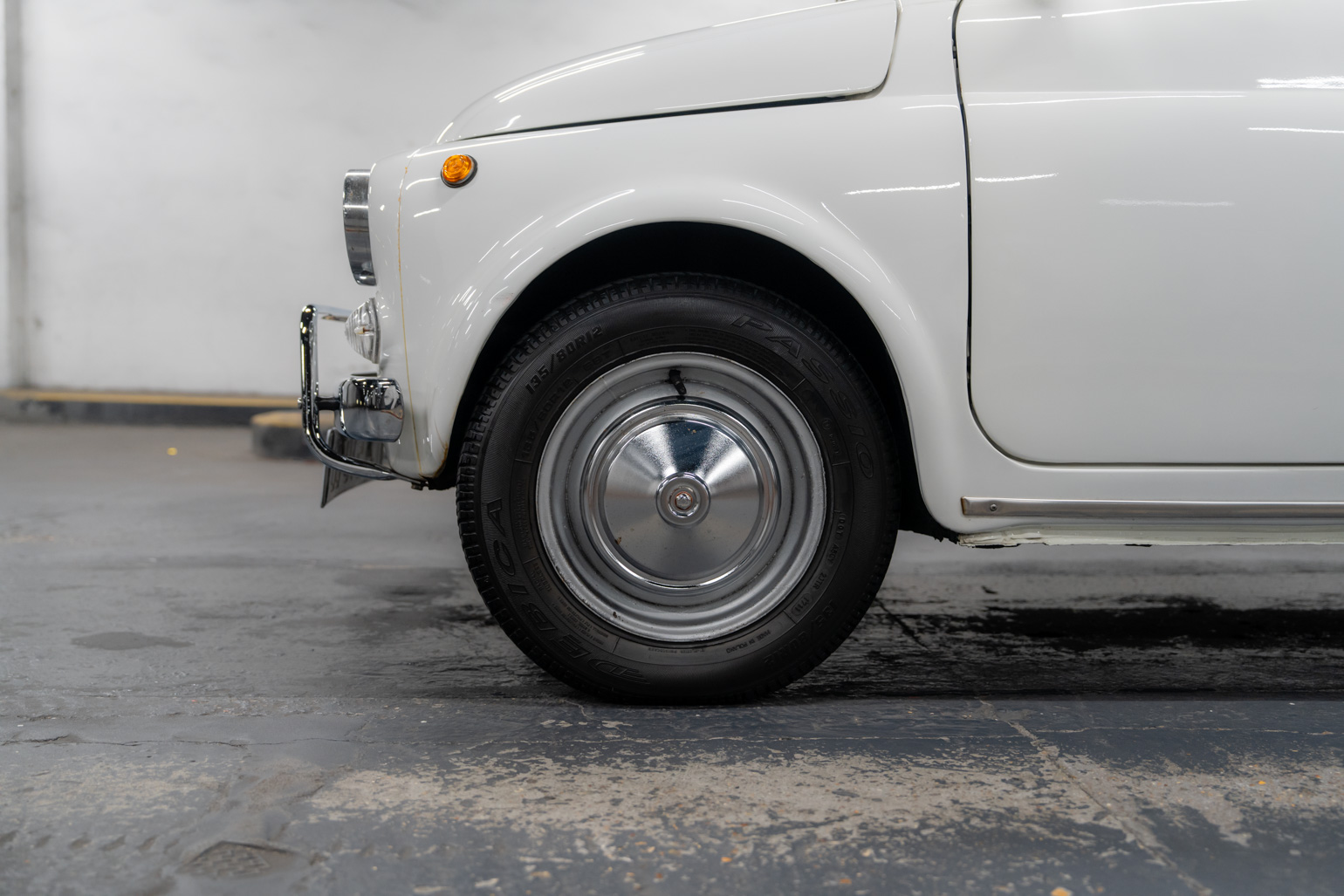
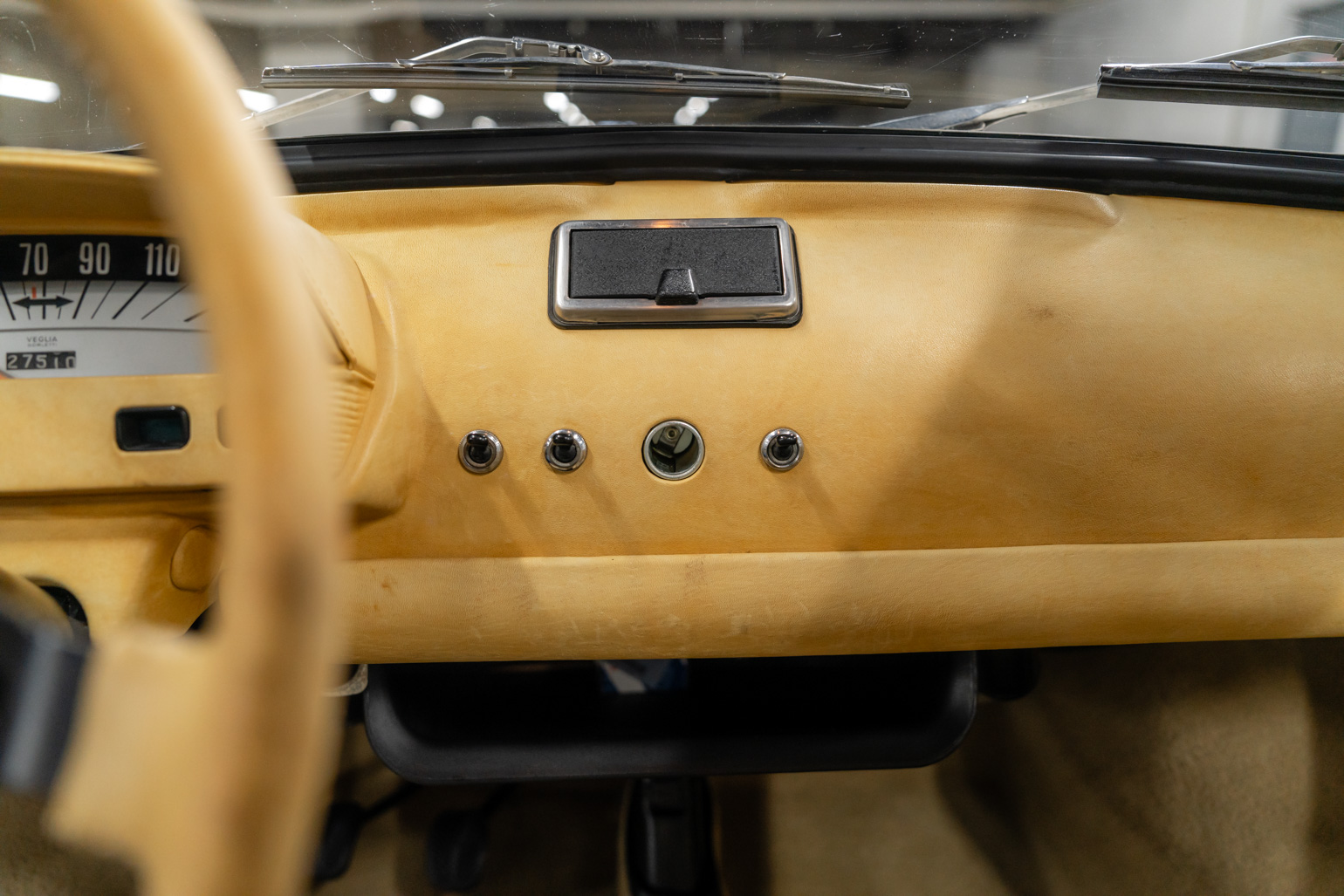
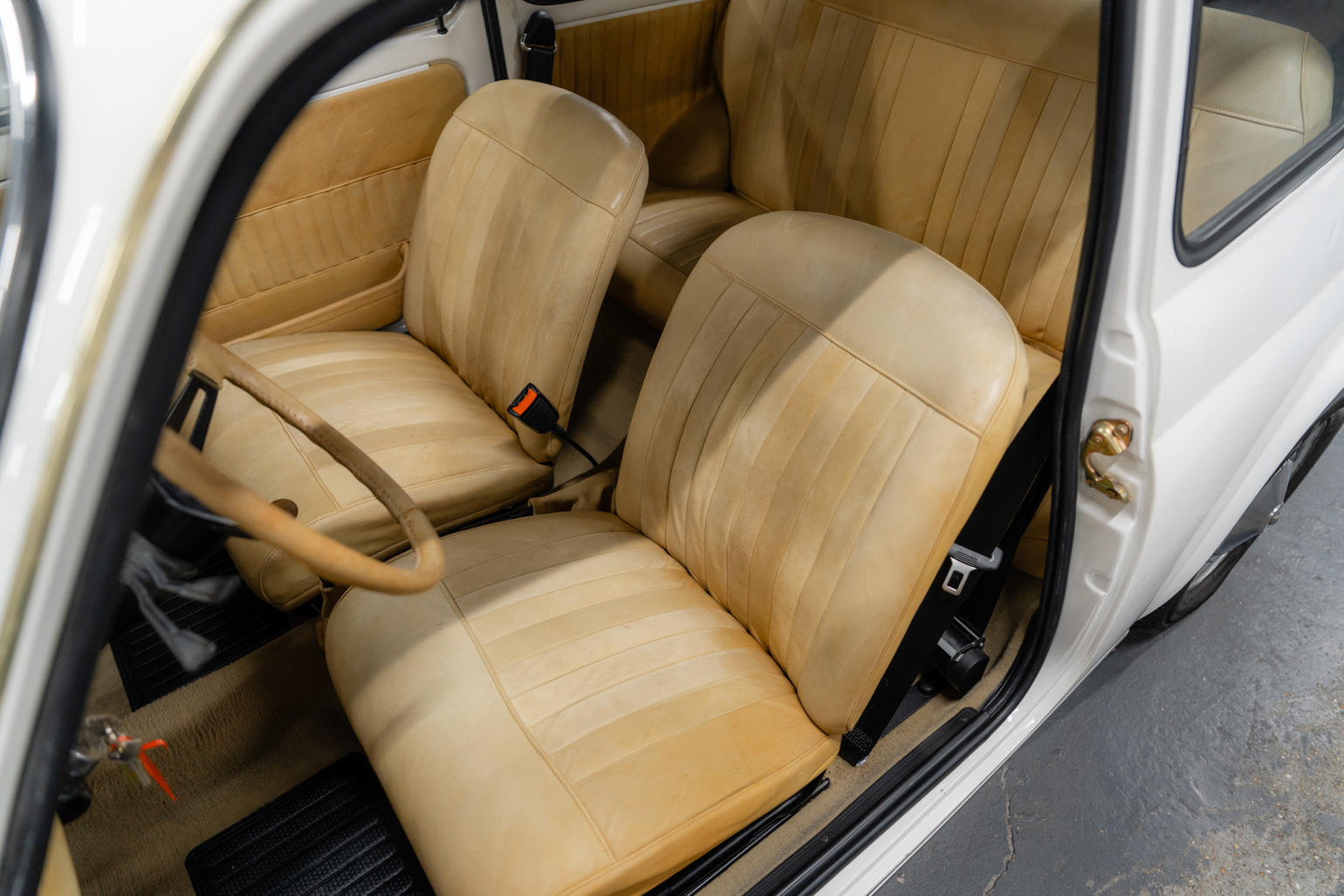
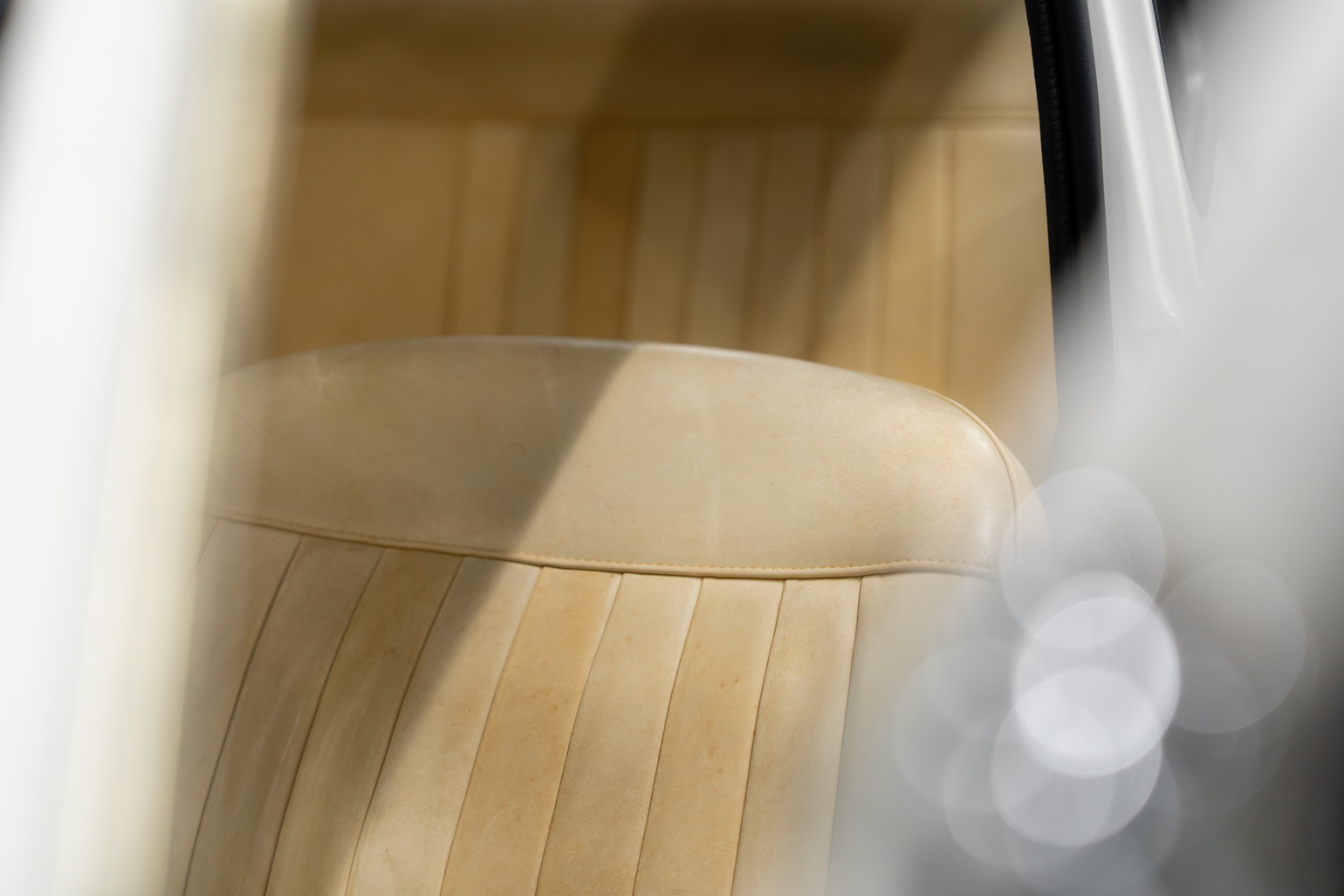
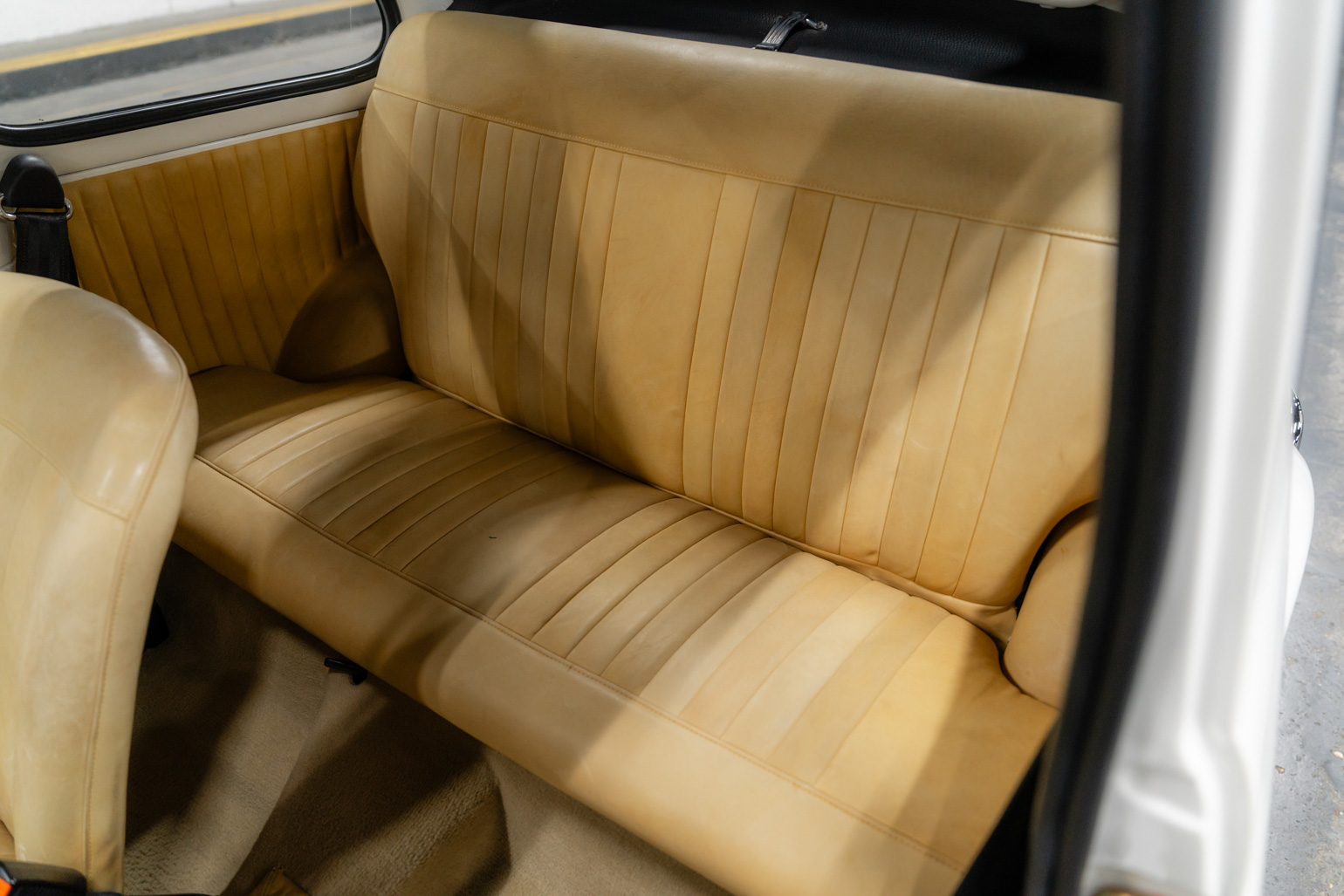
This example is presented in an elegant off-white shade, paired with a beige leather interior. The bodywork shows some minor imperfections, while the cabin is well preserved. The dashboard instruments are fully functional.
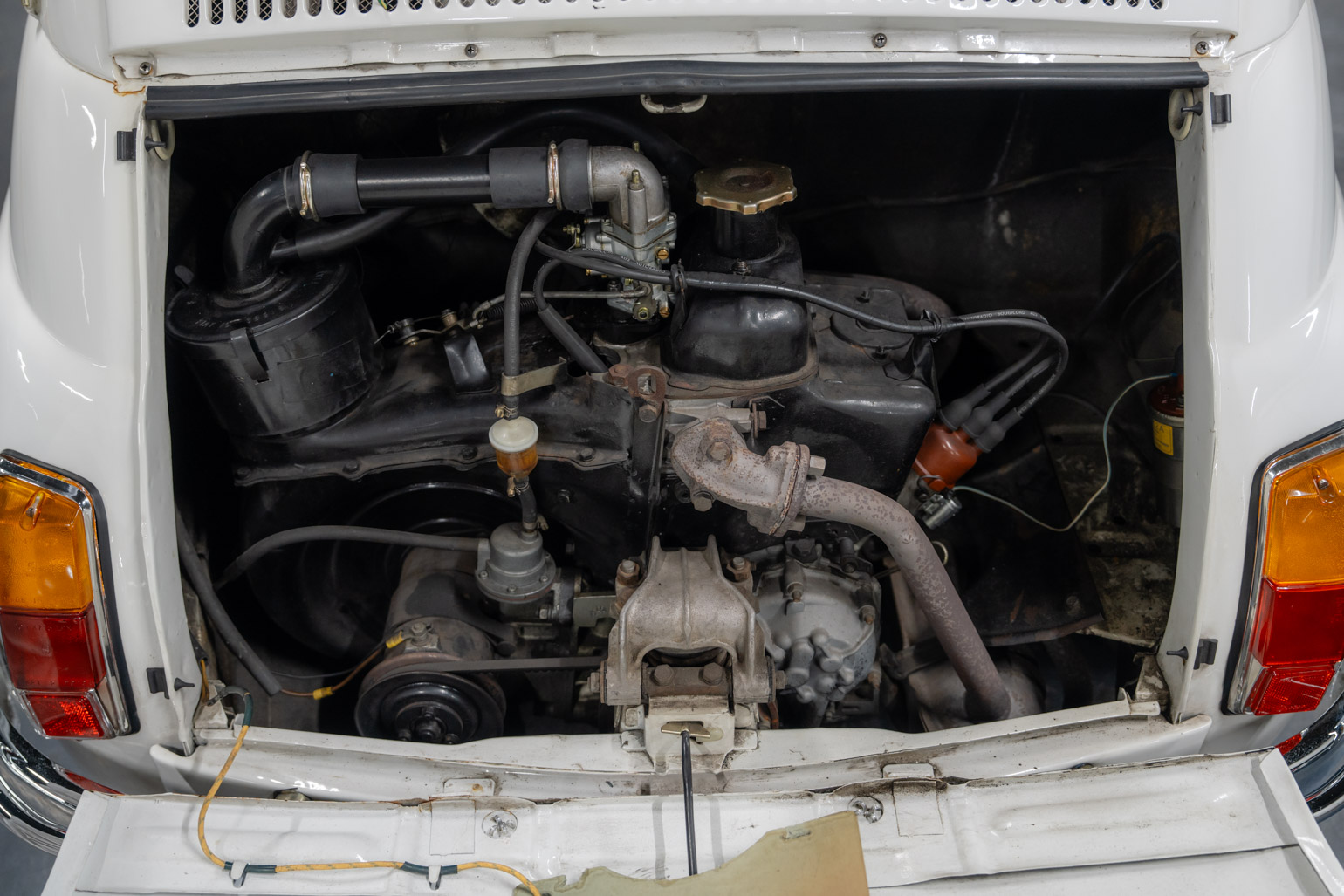
Under the bonnet, the two-cylinder petrol engine produces 18 hp and is paired with a manual gearbox. This Fiat 500 F thus retains the characteristics that contributed to the success of this small Italian city car, with a compact size and simple mechanics.
This example is maintained by specialists.
Consumables are in good overall condition. No modifications have been made to this vehicle and no parts have been replaced or repaired.
No expenses are to be expected.
This Fiat comes with its administrative status certificate and technical inspection report.
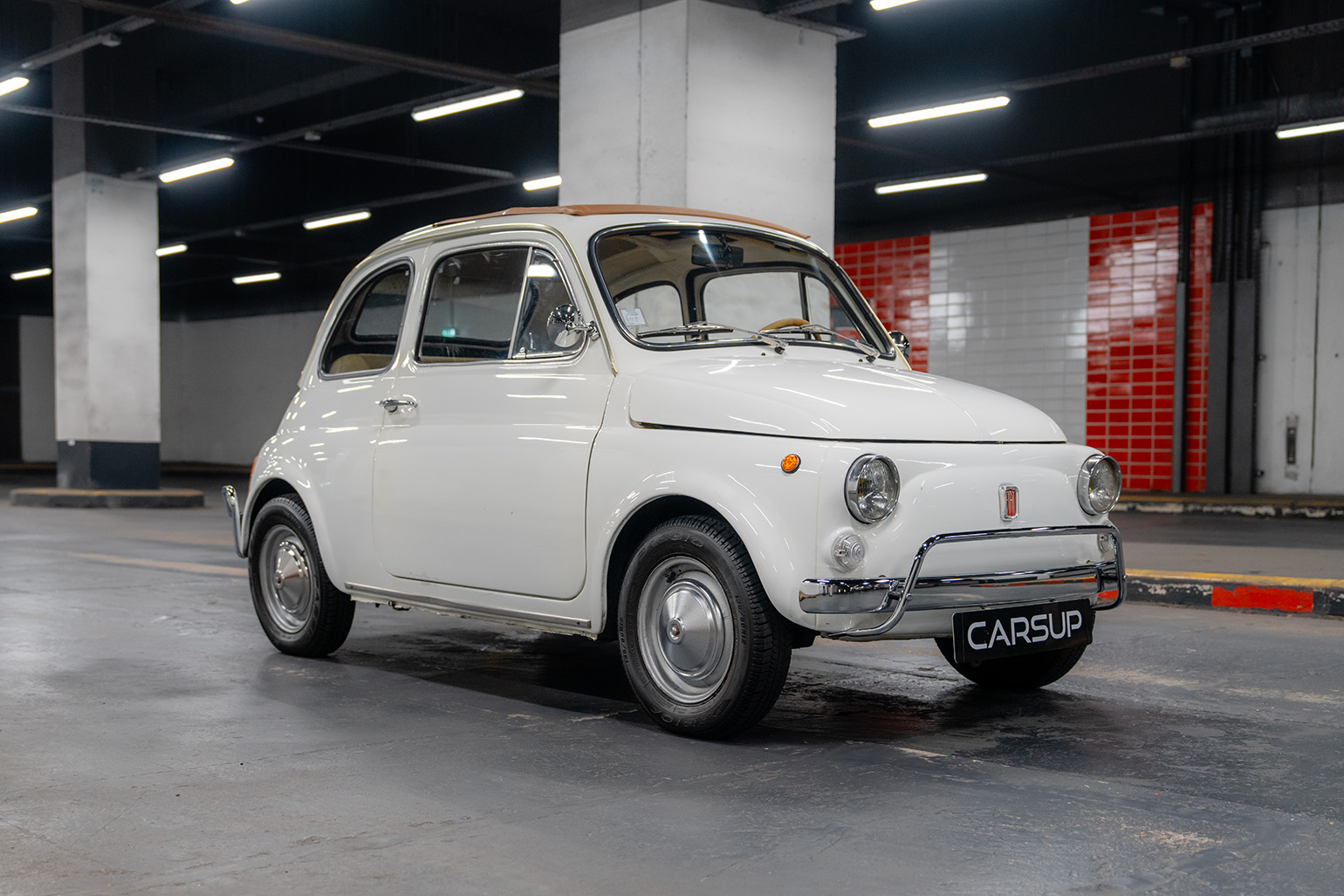
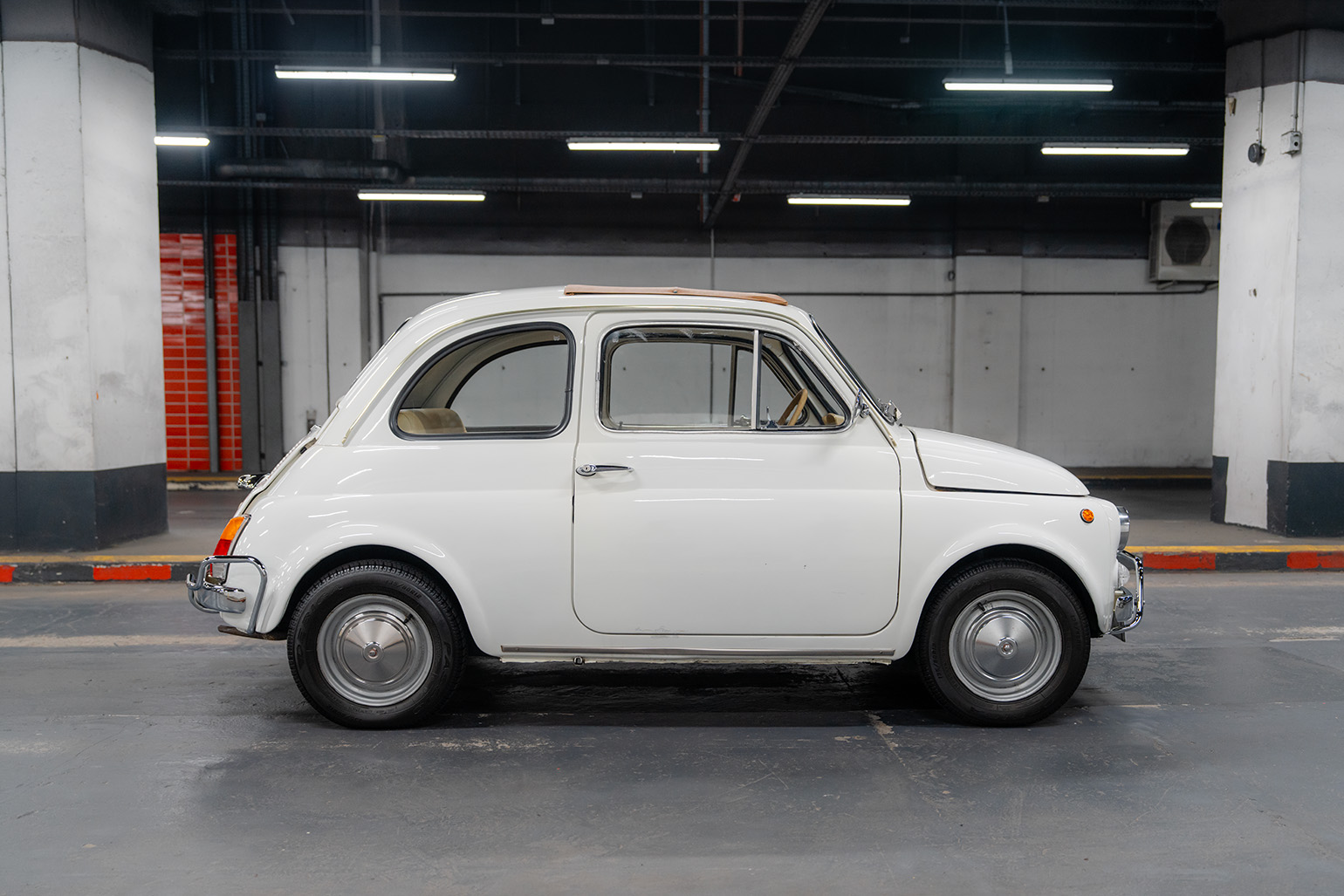
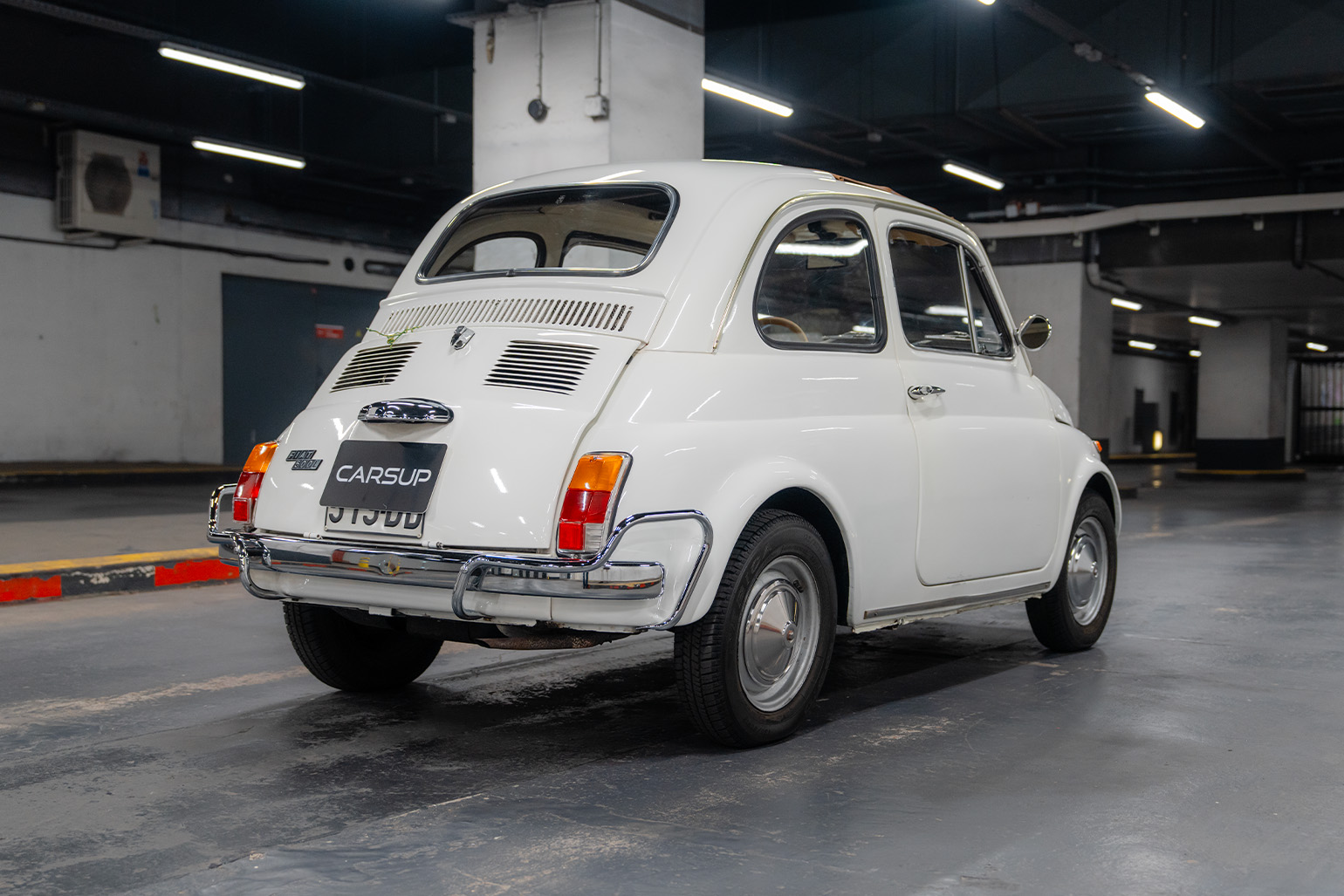
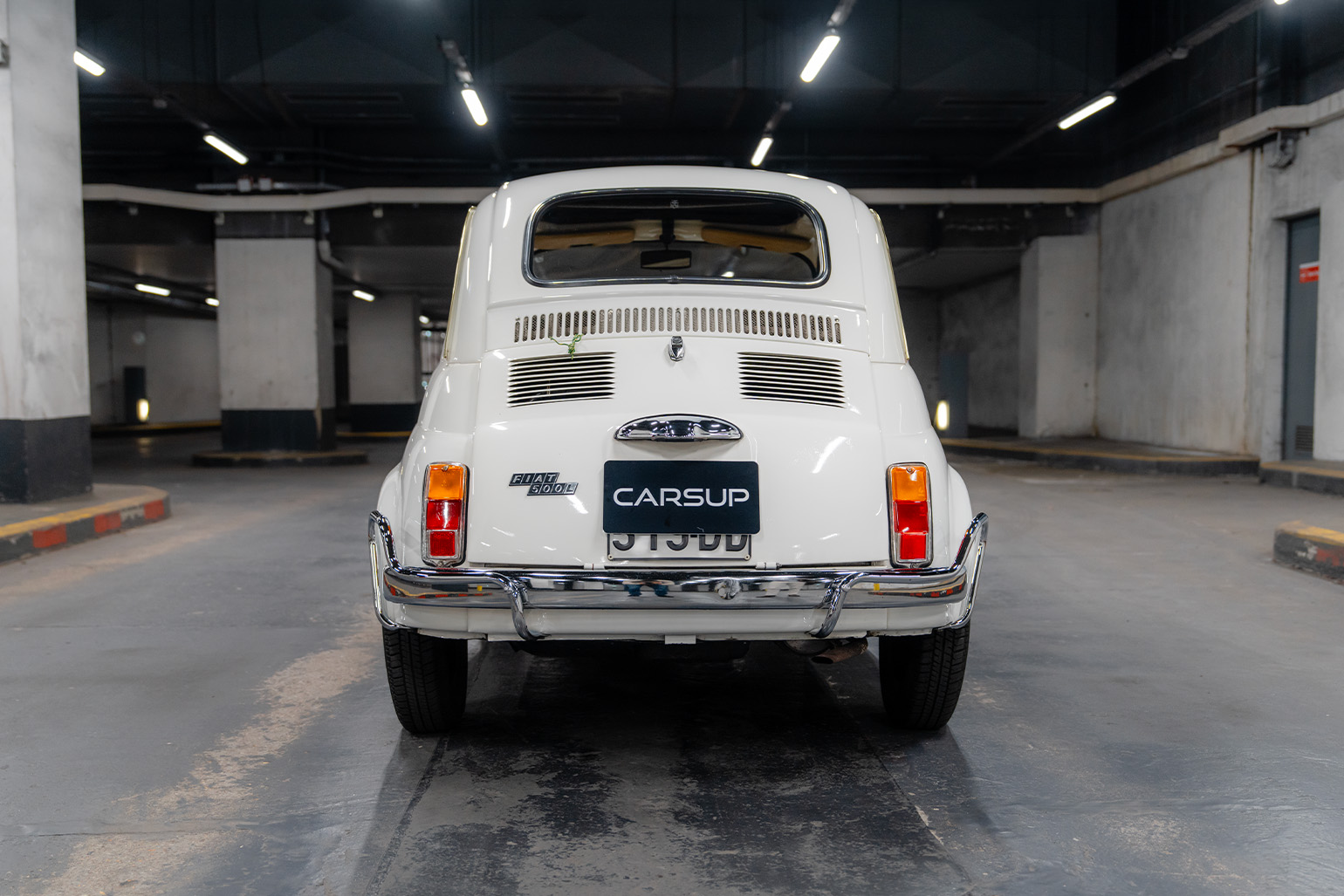
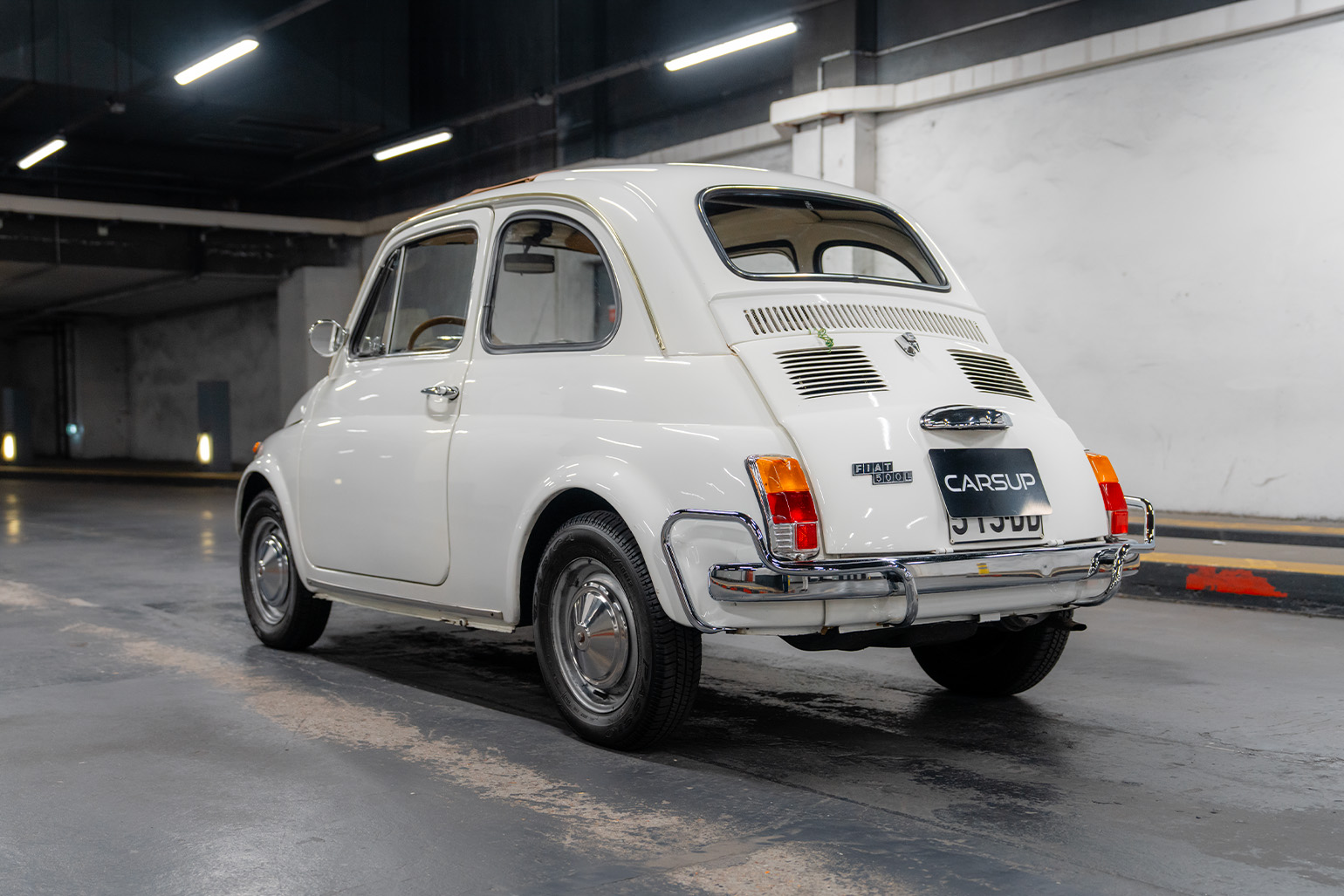
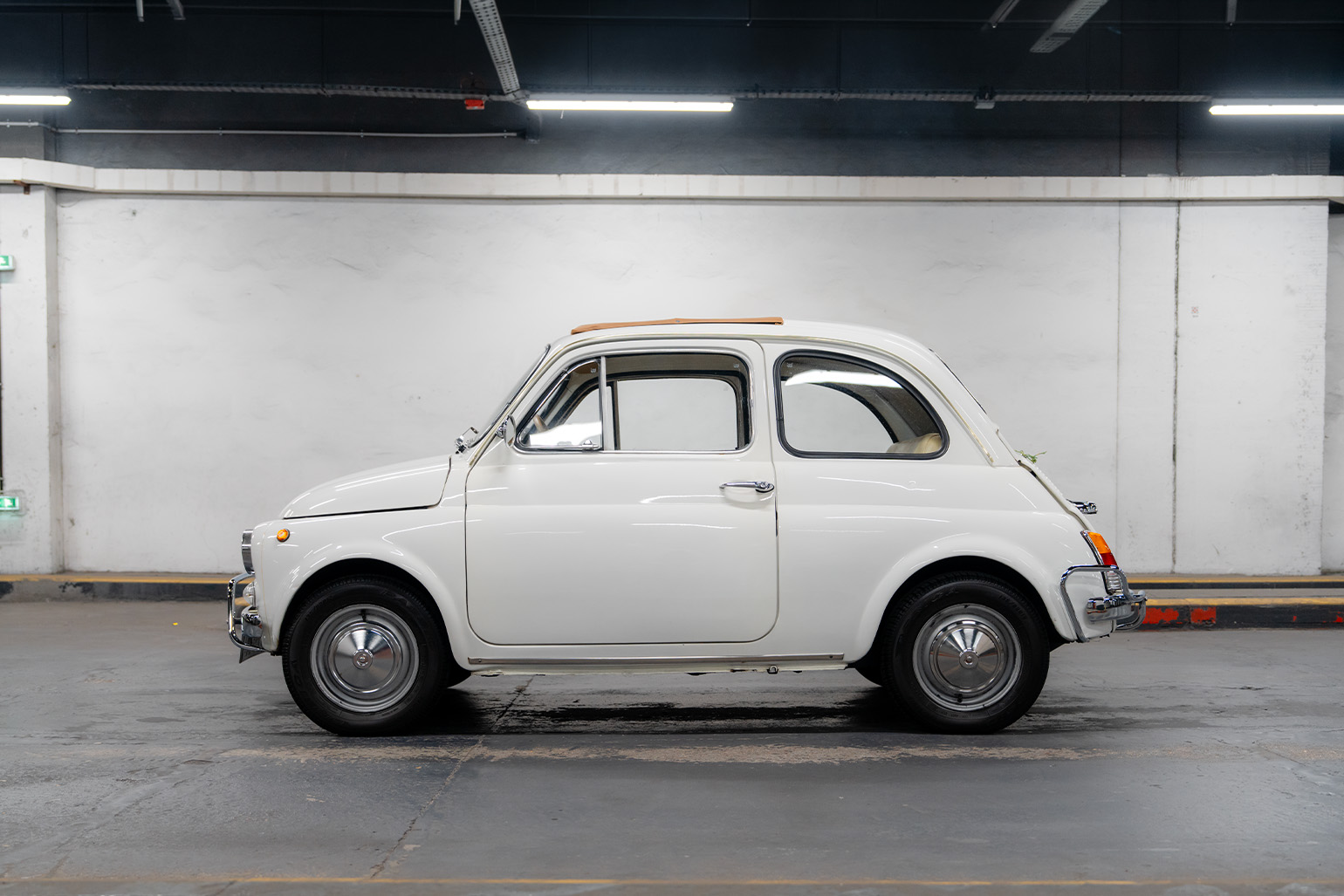
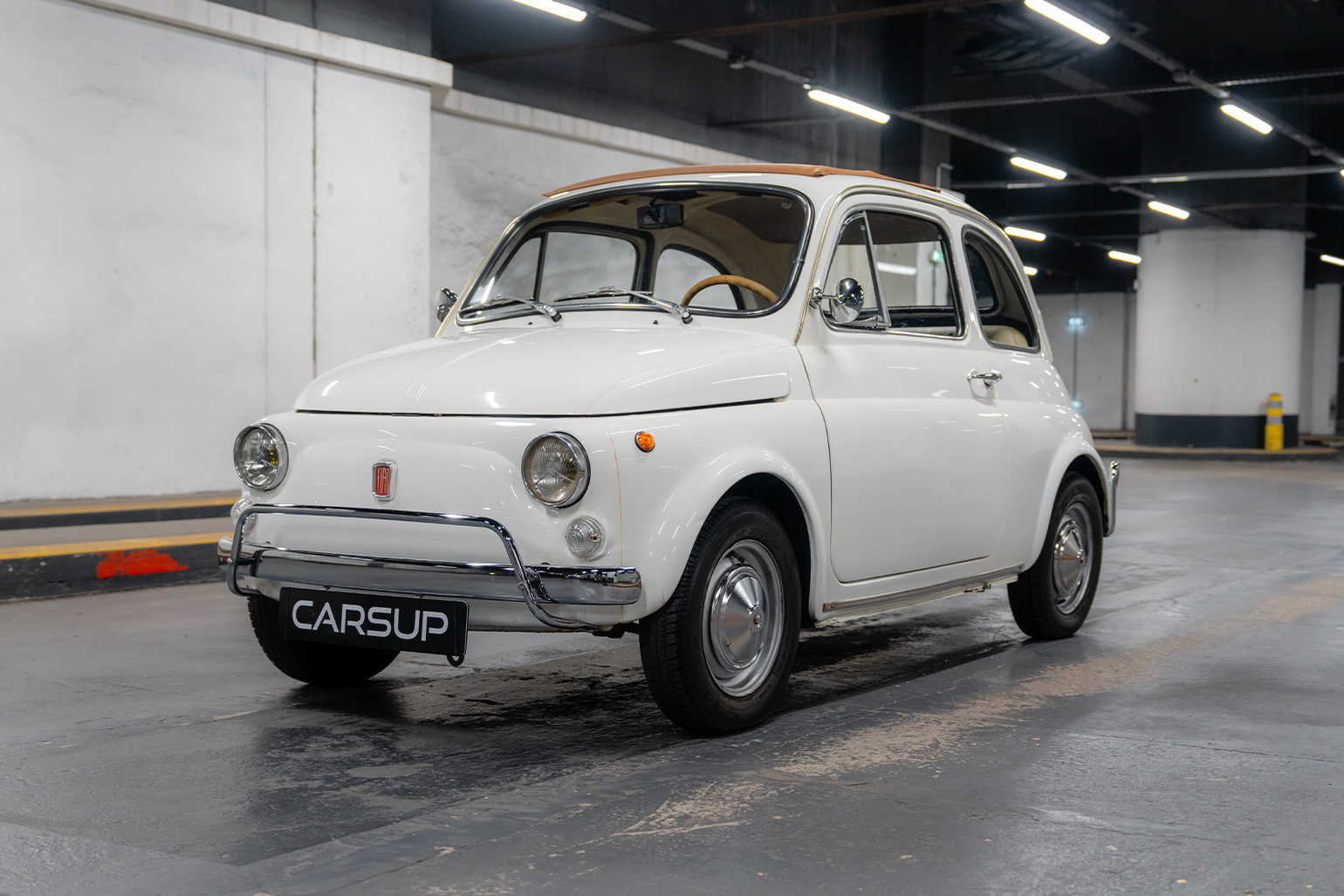
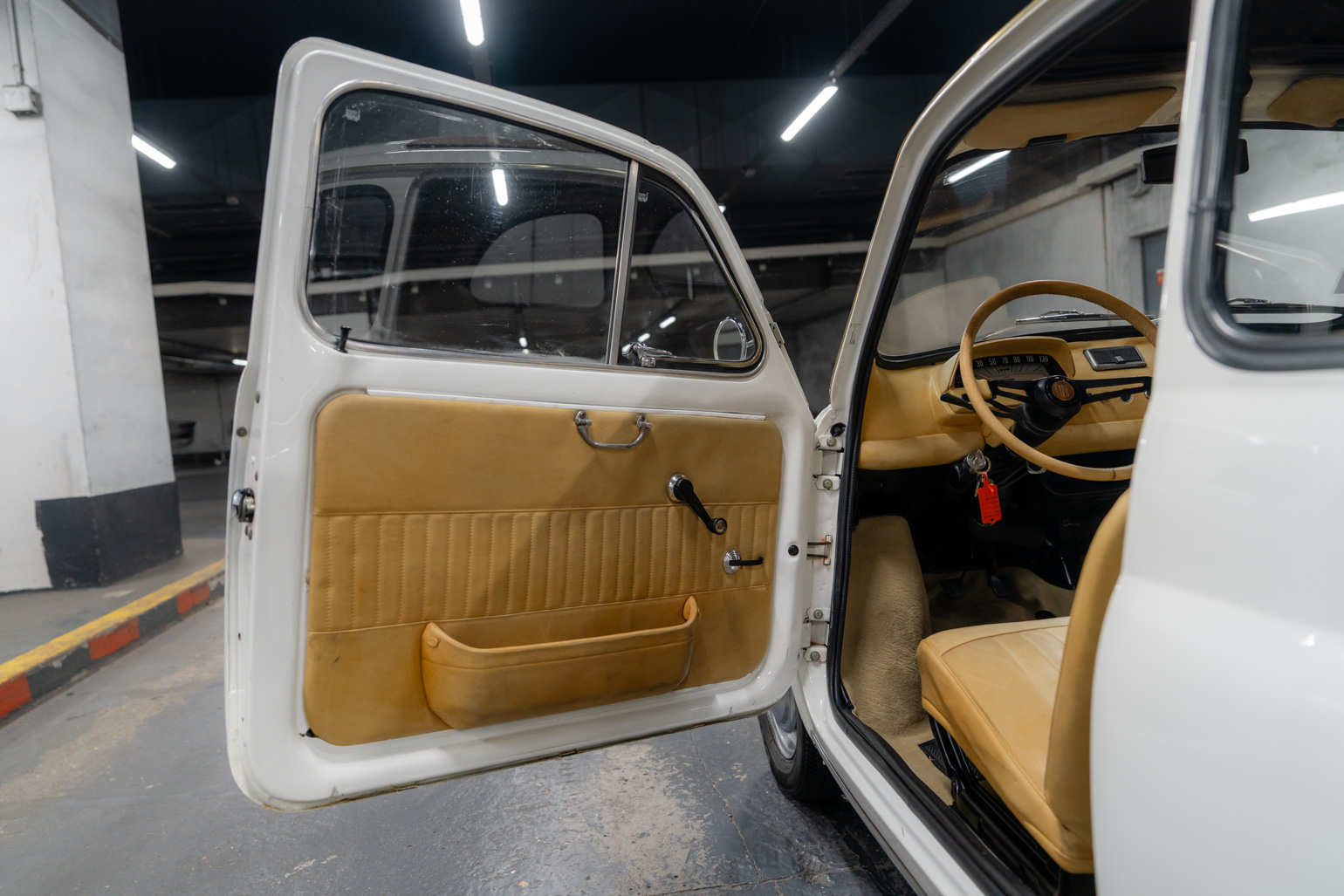
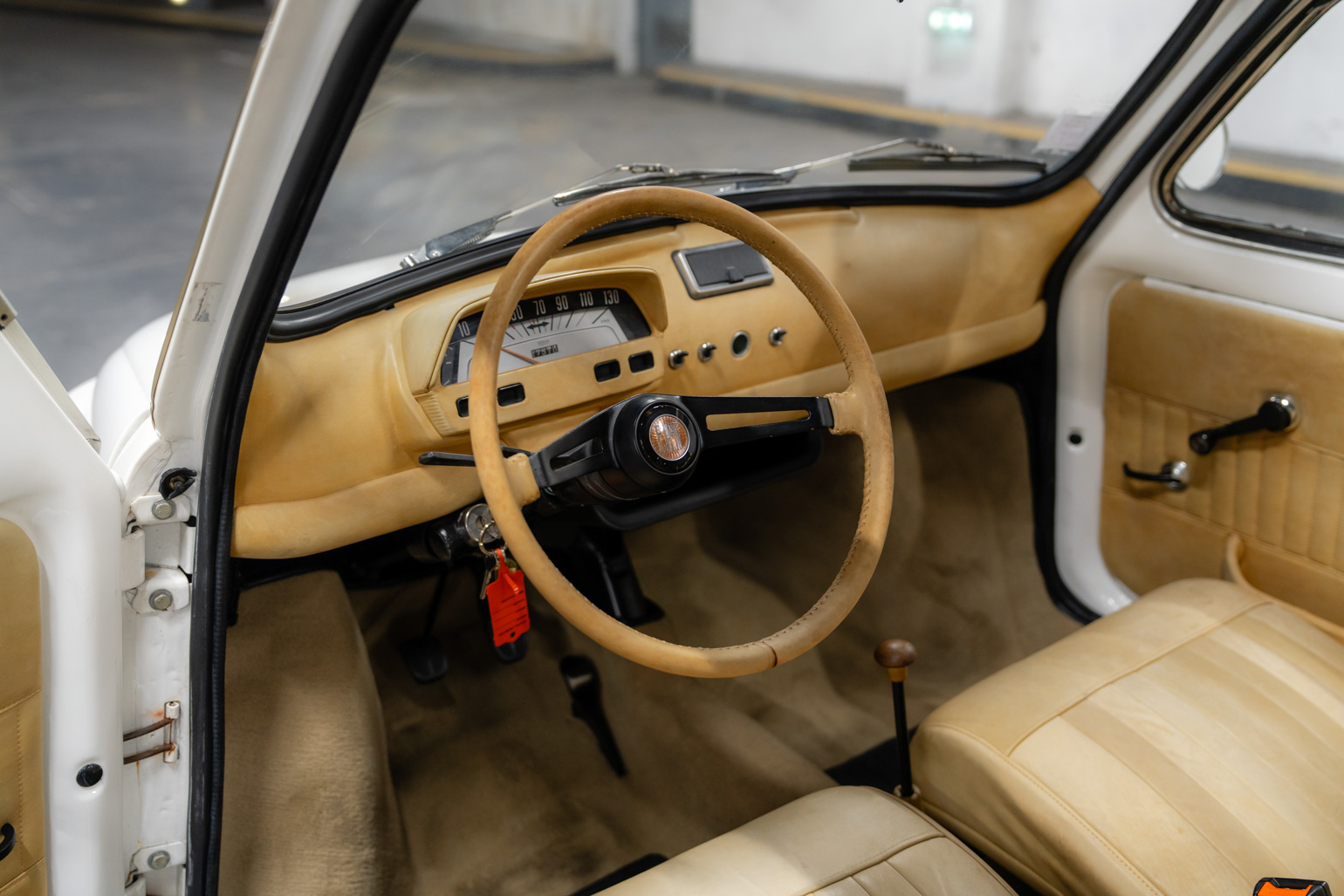
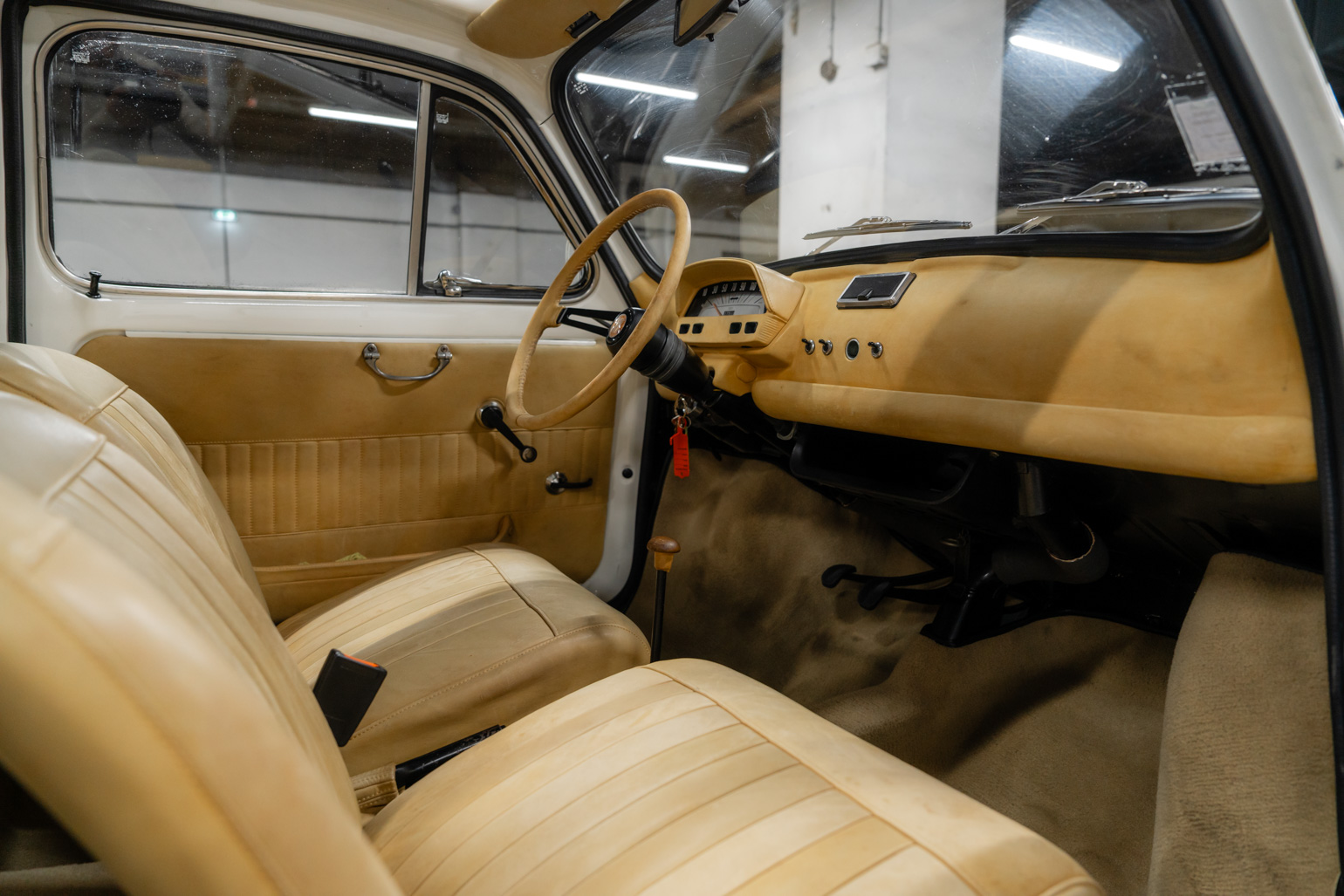
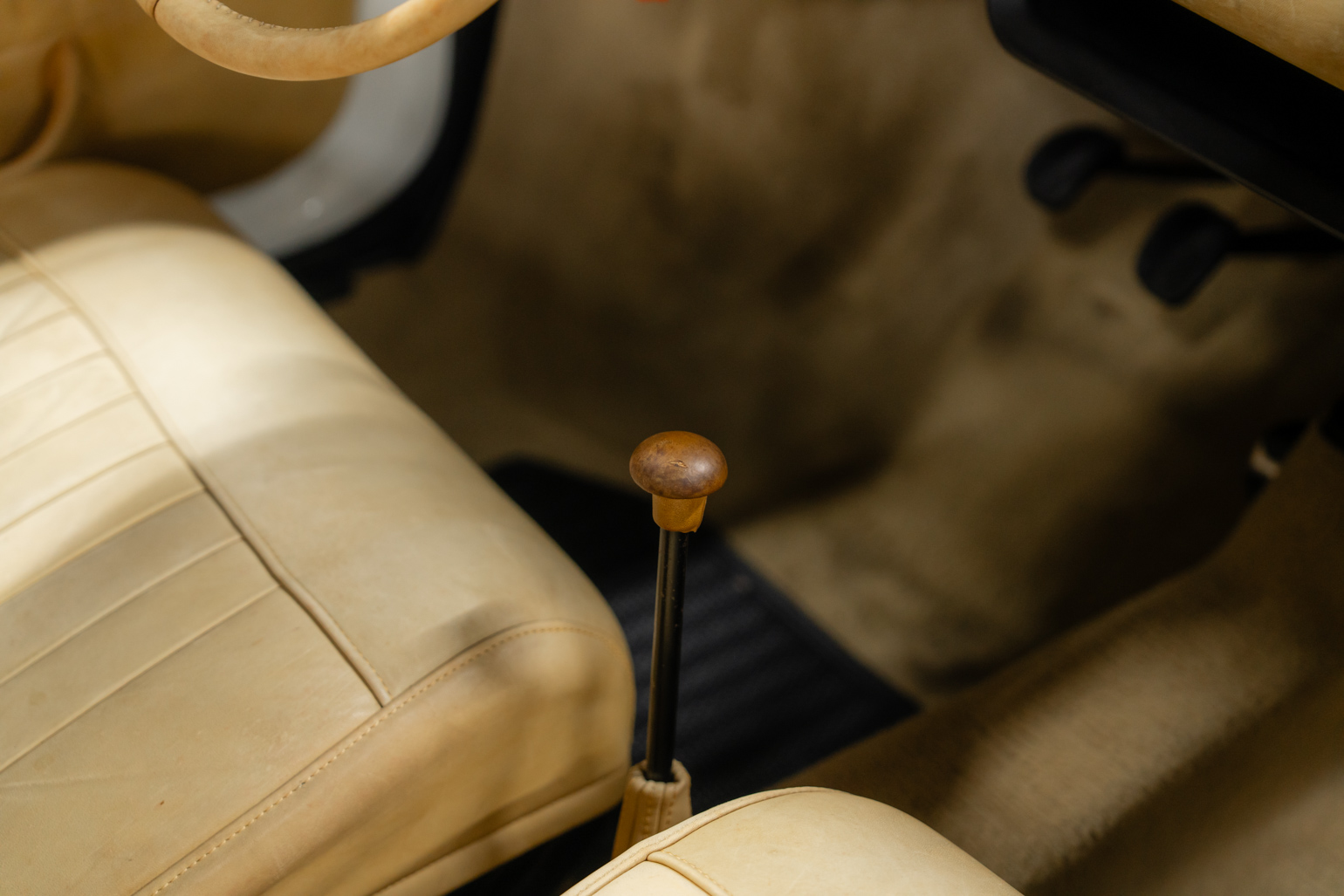
Conceived by Dante Giacosa as Italy’s people’s car, the Fiat 500 arrived on 4 July 1957 and quietly rewired urban mobility. The earliest Nuova 500 was ultra‑basic and underpowered, but Fiat iterated fast: by 1960 the 499.5 cc twin had grown stronger and, in the 18 hp tune that most enthusiasts associate with the 500 F and 500 L, the little four‑seater could bustle to nearly 100 km/h while sipping fuel. Late R (Rinnovata) models even used a 594 cc engine detuned to the same 18 hp DIN for better torque and drivability. Across 1957–1975, more than 3.8 million were built, including the clever Giardiniera estate with its engine laid on its side to free up a flat load bay.
The 500 didn’t emerge in a vacuum. Post‑war Europe was teeming with microcars and economy saloons: BMW’s Isetta and Heinkel bubble cars undercut on size, Citroën’s 2CV matched the frugality with rural toughness, and from 1959 the revolutionary Mini redefined packaging and handling. Fiat’s answer was different: a rear‑engined city car optimised for Italy’s medieval streets, with a roll‑top fabric roof for ventilation and cost saving, and engineering simplicity that made maintenance cheap. It became the heartbeat of Italy’s mass motorisation—La Dolce Vita on a shoestring.
Upgrades arrived steadily rather than as a single leap. The 500 F (1965) introduced front‑hinged doors and a tougher 18 hp engine; the 500 L (1968) layered on chrome over‑riders and a plusher cabin; the 500 R (1972) rationalised the range as the new 126 took over, bringing the 594 cc unit and simplified trim. Electrics evolved from 6V to 12V, braking and cooling improved, and countless running changes honed durability. At the wilder end of the spectrum, Carlo Abarth turned the city car into a terrier: the 595 and 695 derivatives, with bigger carbs, hotter cams and rorty exhausts, punched way above their weight in hillclimbs and club racing.
Culturally the 500 became a star. Pixar’s Cars cast a 1959 500 as the exuberant tyre‑seller Luigi; period newsreels and countless Italian films used it as shorthand for everyday life; and the beach‑chair Jolly conversions by Ghia were summer toys for the Riviera set—owners reportedly included Aristotle Onassis and Gianni Agnelli. Period road tests praised the astonishing economy, turning circle and urban agility, while fairly noting the thrum, modest cruising speed and crosswind sensitivity. None of that dimmed its charm. To enthusiasts, the 18 hp 500 is the sweet spot: enough urge for modern traffic, all the essential lightness and for‑the‑people cleverness that made the Cinquecento an icon.
Un crédit vous engage et doit être remboursé. Vérifiez vos capacités de remboursement avant de vous engager.
Aucun versement sous quelque forme que ce soit ne peut être exigé d'un particulier avant l'obtention d'un ou plusieurs prêts d'argent.
Exemple de financement en Crédit (1) sur 36 mois pour ce véhicule Porsche 911 991 Targa 4 GTS d'occasion vendu au prix de 154900,0 € TTC avec un apport de 31000,0 € : soit un montant financé de 123900,0 €, remboursable en 35 mensualités de 1473,0 € (2) et un premier loyer de 32473,0 € hors assurance(s) et/ou prestation(s) facultative(s).
Montant total dû hors assurance(s) et/ou prestation(s) facultative(s) : 183400,0 €.
Taux débiteur fixe de 7.10 %, TAEG fixe de 7.35%.
Coût total du crédit 177155,44 € dont des intérêts de 24901,08 €, dont des frais de dossier de 4647,0 € étalés sur les 3 premiers mois. Dans le cas d'une offre spéciale sur le prix du véhicule, le montant total financé s'entend offres promotionnelles et aides gouvernementales (prime à la conversion, bonus écologique...) déduites (selon critères d'éligibilité en vigueur).
(1) Offre valable réservée aux particuliers chez tous les distributeurs participant à l’opération. Sous réserve d'acceptation définitive du dossier de financement par CGL, Compagnie Générale de Location d'Équipements - S.A au capital de 58 606 156 euros - 69 avenue de Flandre 59700 Marcq-en-Barœul - SIREN 303 236 186 RCS Lille Métropole ou Financo, S.A à Directoire et Conseil de surveillance au capital de 210 000 000 euros - 335 rue Antoine de Saint-Exupéry, 29490 Guipavas - SIREN 338 138 795, RCS Brest
(2) Exemple hors Assurance des personnes facultative. Coût de l'assurance facultative des personnes [Assurance Protection Pécuniaire] : Taux Annuel Effectif Assurance (TAEA) 4,03 %, 173,56 €/mois en sus du loyer, soit un montant total dû de 6244,56 € au titre de cette assurance sur la durée totale du financement.
Médiateur de la consommation :
En cas de litige, et après réclamation écrite auprès de nos services restée infructueuse, tout client agissant en qualité de consommateur (non professionnel) peut saisir gratuitement le Médiateur FNA en vue d’une résolution amiable de son différend.
Adresse postale : Le Médiateur FNA – Immeuble Axe Nord – 9 & 11 avenue Michelet – 93583 Saint Ouen Cedex
Site internet : www.mediateur.fna.fr sur lequel vous pouvez déposer en ligne votre demande de médiation et consulter les informations relatives au processus de médiation.
Parfait état - Historique limpide - Carte grise Française - Carnet + Factures
Parfait état - Historique limpide - Carte grise Française - Carnet + Factures
Parfait état - Historique limpide - Carte grise Française - Carnet + Factures
Didn't find the answer you were looking for?
Contact us, and an expert will respond promptly.
Godefroy, a seasoned automotive specialist, provides expert guidance in the purchase and sale of exceptional vehicles, combining professionalism, attentiveness, and a personalized approach to meet your every expectation.

Samuel Lelarge
CEO and Founder of Carsup
Supporting car enthusiasts in their projects to buy and sell exceptional vehicles is at the heart of our commitment.
We make every effort to ensure a smooth, transparent process that is perfectly adapted to your expectations. Each transaction is designed to preserve the value of your automotive assets while meeting the highest requirements.
This service aims to offer you the freedom to develop your collection according to your desires, in all simplicity and without constraints, thanks to our complete management of the processes of buying and selling your cars.