Le coin des experts
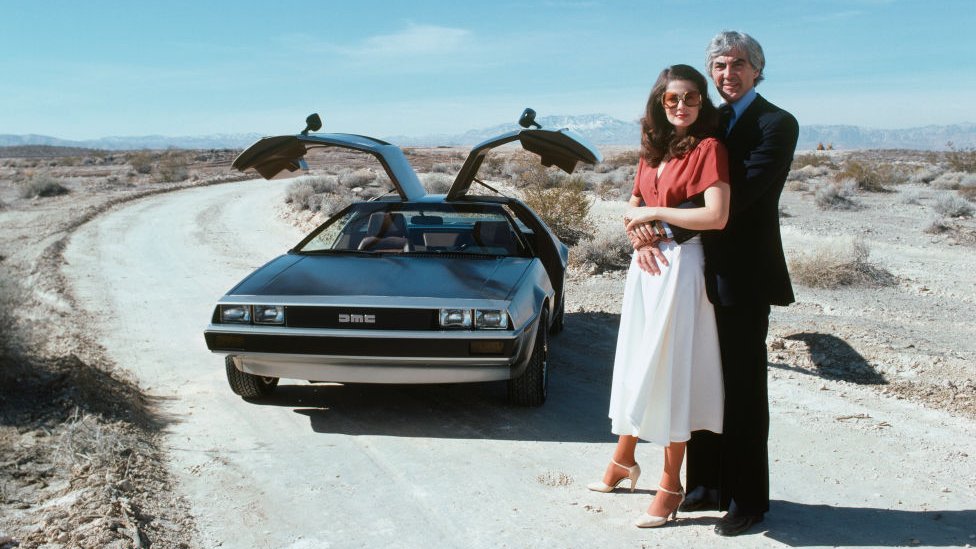
Sometimes stories seem unbelievable. One thing is certain, the DeLorean story is a perfect example, so much so that Martin Scorsese could have brought it to the screen. From his beginnings in working life with his first positions at General Motors, to the closure of his recently created company, John Z. Delorean has shone both in his genius and in his astonishing character. Its history and that of its brand, which are little known in their details, deserve some time. A look back is necessary to take stock of a story that is at least... out of the ordinary.
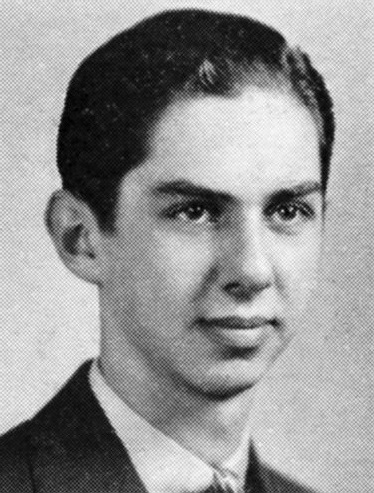
John Zachary DeLorean, whose full name is, was born on January 6, 1925 in Detroit. He came from a working-class family and grew up east of Detroit. His father, Zachary, was a union organizer and a worker in the Ford Motor Company foundry. His professional situation is unstable. The cause was a very partial mastery of English and recurrent alcohol problems. Her mother, Kathryn, works for General Electric and her main role is to maintain order at home. When times are difficult, both financially and because of his father's alcoholism, John Z DeLorean leaves to live with his mother and brother with his aunt, based in Los Angeles.
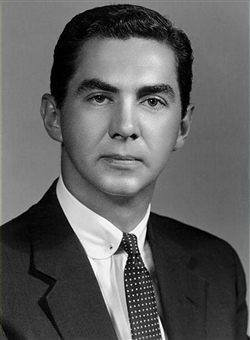
An excellent student, he obtained a master's degree in automotive engineering, although his career was interrupted by the Second World War where he would be engaged. Nevertheless, he obtained an MBA from the University of Michigan. His automotive career began quickly, with his first experience on the research and development team at Packard Motor Car Company in 1952.
After confirming his talents, DeLorean accepted an engineering position in the Pontiac division of General Motors in 1956. At the time the largest company in the world, and considered “The Place to Be”, General Motors was looking for a second wind for its brand. It is no longer able to reach young Americans, a key sector of the market and an essential factor for its future. The cars offered by the manufacturer are considered “boring” and intended for the elderly. DeLorean decided to counter the desire of GM managers to build large and very comfortable cars, by producing more sporty and dynamic vehicles. When Pete Estes took over Pontiac in 1961 and DeLorean was appointed chief engineer, he seized the opportunity to integrate a large 389 cubic inch V8 engine, from the Pontiac Bonneville, into the Pontiac Tempest. The medium-sized car, combined with a large cubic engine, offers extra power and torque adapted to competition, while offering maneuverability and robustness. The so-called Pontiac Tempest LeMans GTO creates a new category of cars, known as muscle cars.
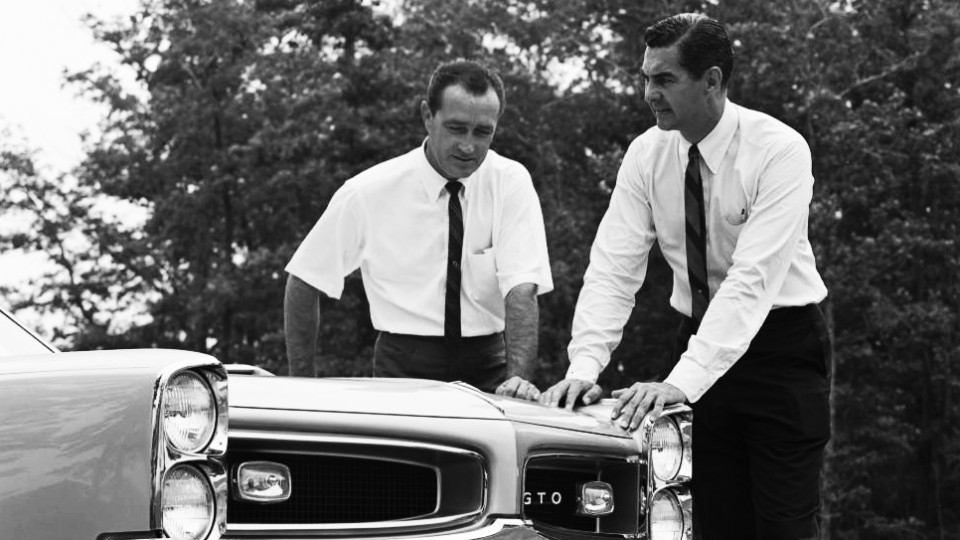
Since General Motors has a strict mandate prohibiting the use of large engines in medium-sized cars, John Z. DeLorean, with the support of Pete Estes, is selling his novelty as an option. The car is not offered with the V8 engine in its base version, but has an additional option offered for 295 dollars on the 1964 Tempest. The GTO set was a great success with 32,450 copies sold during its first year of production. Despite this obvious act of defiance, DeLorean was rewarded.
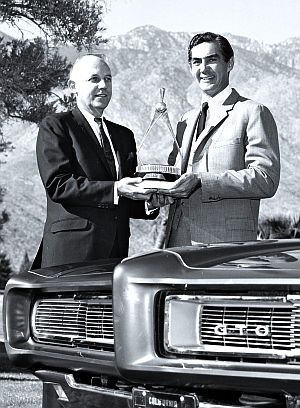
He was ahead of many more experienced engineers and became, in 1965, the youngest general manager of Pontiac at the age of 40. His success is based as much on his engineering talents as on his ability to consider design as an essential aspect. The Pontiac Firebird, released in 1967, will be a perfect example. His lifestyle changed radically following his numerous successes, leading to his divorce from his first wife in 1968. He began to spend more time on the West Coast, where he frequented the Hollywood elite, between models and actresses. His career at GM continued in 1969, where he was appointed director of Chevrolet, before becoming head of GM's North American operations in 1972.

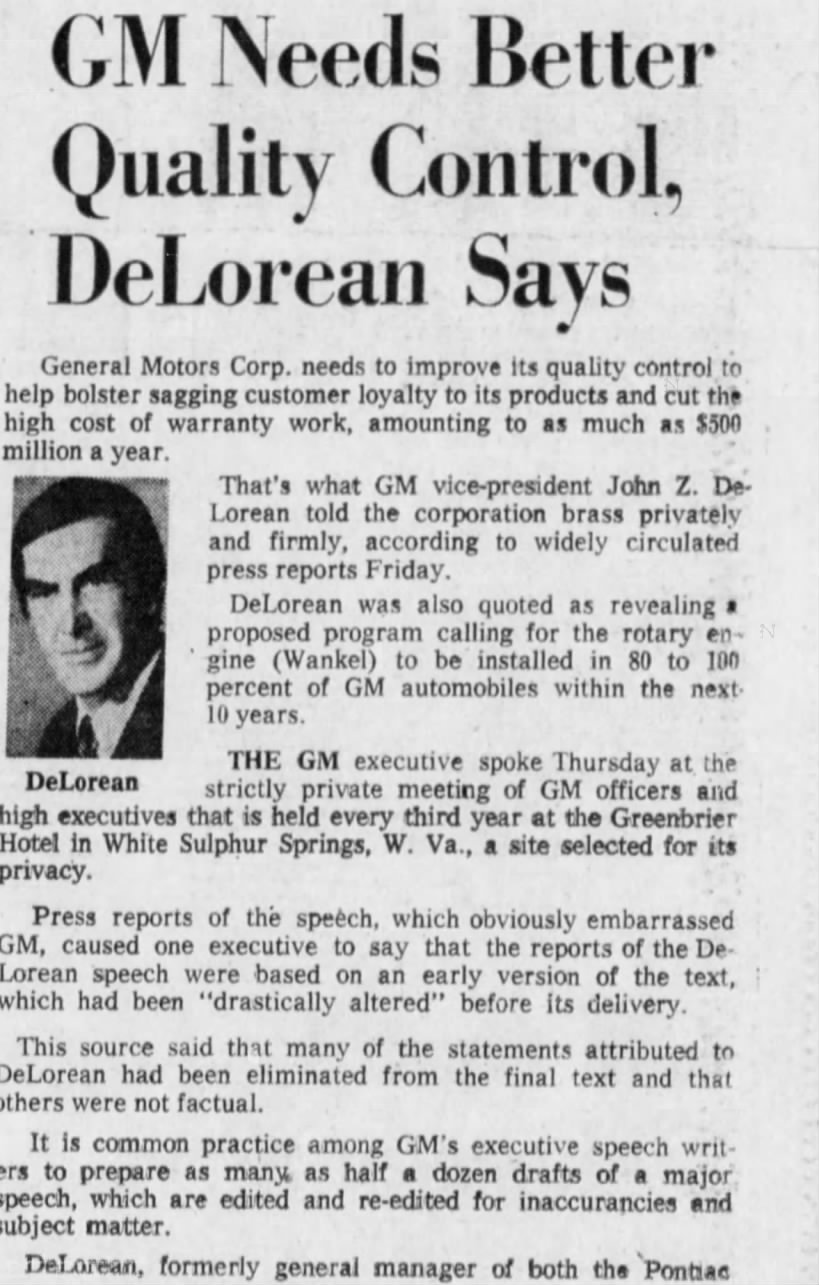
John Z DeLorean's evolution isn't for everyone. Having become arrogant to say the least and turning his back on the GM elite, his relationship with managers is motivated more by greed than by genuine collaboration based on trust. His lifestyle and his desire to make changes in the GM line-up, in particular by abandoning large cars for reasons of fuel economy, deeply irritated his professional circle. At the same time, he married actress Kelly Harmon in 1969, then only 20 years old. The couple adopted a son, Zachary, before divorcing in 1973. Negative events follow one another, especially following Greenbrier's famous presentation. Tasked to deliver a speech to 700 senior General Motors executives on a subject that was at the very least spicy (the quality of cars and the resulting results), John Z. DeLorean is preparing a speech considered too harsh. Convinced by his collaborators to modify it, there will nevertheless remain a copy, which appears mysteriously in the Detroit News. His employees at GM would wait no less to turn against him, resulting from his resignation in April 1973.
Six months later, John Z. DeLorean told the New York Times:”Anyway, I didn't want the job, because a senior executive position at GM involves sitting in meetings all day. Even at $650,000 a year, if the work is not satisfactory, we do something else.” After 17 years of collaboration at GM, a new page is opening for John Z DeLorean.
Barely five weeks later, John Z. DeLorean has already started a new life. He married supermodel Cristina Ferrara in a private ceremony in Los Angeles and moved to New York. At the same time, he is implementing an idea that has been close to his heart for several years already: the creation of his own car. After so many years at GM, his wish is to create and build himself the best sports car in the world, the safest, the most reliable and durable, which he will define as “a car that would be the best of everything”. To do this, he officially founded the DeLorean Motor Company on October 24, 1975 in Detroit and called on Bill Collins, a former Pontiac colleague and participant in the creation of the GTO, to design the first prototype.
The ambition is huge. The two men wanted to develop a sports car for gentlemen, with a striking line, a rear engine, butterfly doors and a stainless steel body. In summary, the DeLorean project goes against the tide of the American market of the 1970s.
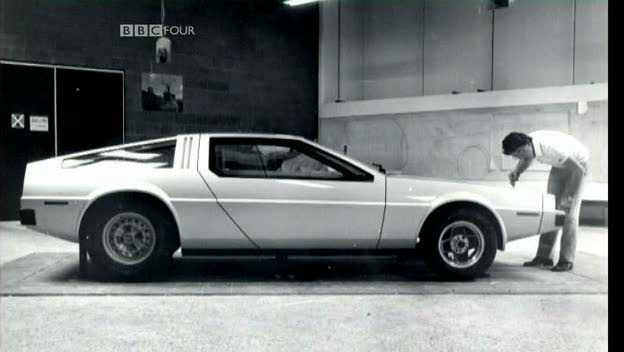
In just two years, the company succeeded in creating a mid-engine prototype, named DSV-1 (for DeLorean Safety Vehicle). After Bill Collins created the first prototype, John Z. DeLorean called on the brilliant Colin Chapman, the famous founder of Lotus Cars. The latter developed a chassis directly derived from the Lotus Esprit and also designed the suspensions. Confident in the quality of Chapman's work in developing the ultimate prototype, John Z DeLorean did not hold Bill Collins back. In terms of design, the car is made by a big name in the automotive world, Giorgetto Giugiaro, Italian designer and founder of ItalDesign. At the origin of classics such as the Lotus Esprit, the Ferrari 250 GT SWB Bertone or the Alfa Romeo Iguana concept, Giorgetto Giugiaro is inspired by a 1970 concept car originally designed for Porsche. Featuring a wedge shape, a stainless steel body and butterfly doors, the concept car made it possible to quickly develop the prototype and move forward with the creation of the now named DSV-12 (12 referring to the $12,000 announced retail price).
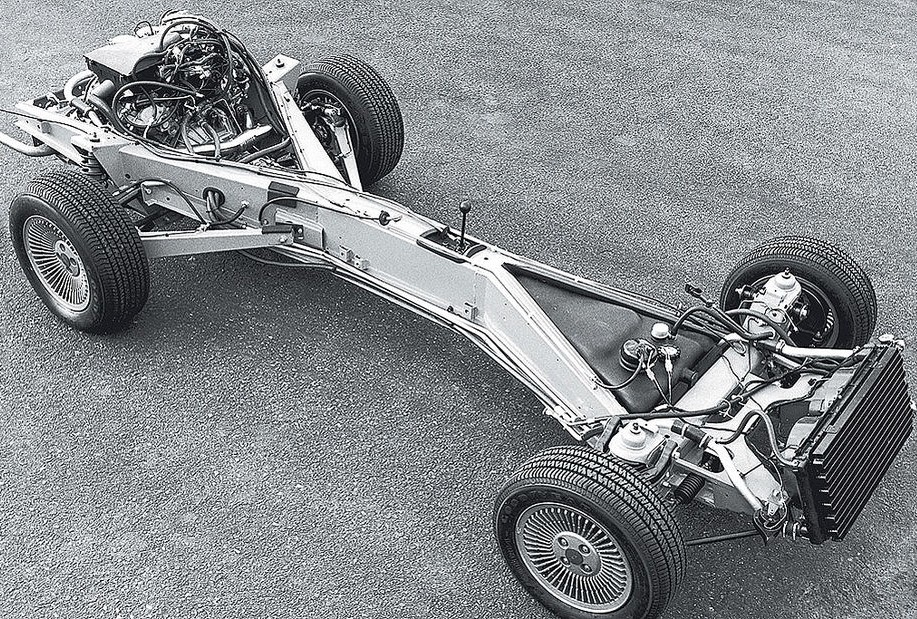
With the body and chassis design ready, John Z. DeLorean was looking for an engine to finalize his work. His choice quickly turned to Comotor, a company belonging to Citroën and NSU, which produced a Wankel rotary engine, both original and efficient. After further study, he quickly realized some major faults in the engine. Suffering from thermodynamic problems due to an enormous surface area and an inadequate shape of the combustion chamber, the Wankel engine has a slow and incomplete combustion, causing very high fuel consumption. Excessive oil consumption leads to poor reliability, while engine certification and its price represent real financial barriers. The final choice is the V6 PRV engine, produced by Peugeot, Renault and Volvo, produced by Peugeot, Renault and Volvo, already approved in the United States, more reliable and developing around 130 horsepower, considered sufficient.
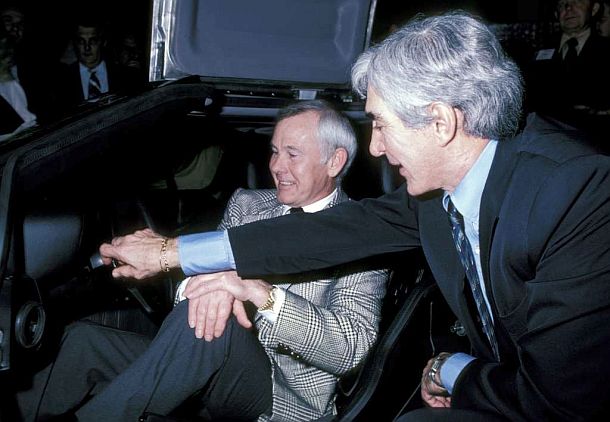
To finance his project, John Z DeLorean, as an excellent American businessman, did not pull a single dollar out of his pocket. His first financing, allowing him to create prototypes and present his car, was mostly obtained thanks to a loan from the Bank of America. He also convinced some jet-set investors, such as Johnny Carson, Roy Clark or Sammy Davis Jr., to invest in his project. During the presentation of his prototype in New Orleans, he even managed to raise funds by selling shares in his company to more than 200 dealerships who will sell the DeLorean, with no delivery date and no factory to build them. His business genius is never far away.

Despite this initial funding, John Z. DeLorean did not have the money needed to build a factory. In February 1978, it was reported that DeLorean was talking with Canada, Spain, Spain, Pennsylvania, Ohio and the city of Detroit to build it. However, a preliminary agreement was reached with the American Department of Commerce and the Government of Puerto Rico to build its factory on a former Air Force base, which was quickly swept away by a more attractive offer. The British government proposed to John Z. DeLorean to build his factory in Northern Ireland, on a pasture in Dunmurry, near Belfast. Very affected by unemployment, the Belfast region offers an abundant and available workforce, a strong argument for John Z. DeLorean in order to obtain large amounts of funding. The British government then offered him more than 100 million dollars in the form of loans and loan guarantees, to which were added tens of millions of dollars from private investors.
The plan is perfect, but some elements threaten the future of the factory, including the civil war in Northern Ireland, which has pitted Catholics and Protestants against each other in recent years. This conflict has its origin in the belonging of Northern Ireland to the United Kingdom, and the demand for independence from part of the population. The arrival of a factory, which makes it possible to employ many workers and reduce the unemployment rate, is seen as a good opportunity for the British government to ease tensions. John Z. DeLorean doesn't care about politics at all, and gets back his $100 million to build his factory. Six buildings with a total area of 61,000 m² were built starting in October 1978 in 16 months. However, financial problems emerged during construction, noted by Barrie Wills, DMC Purchasing and Procurement Director. The business plan, drawn up after the conclusion of the project in Northern Ireland, does not provide sufficient funds to cover the period until production begins. Delays are piling up, both in developing the car and in building the factory, and finances are collapsing.
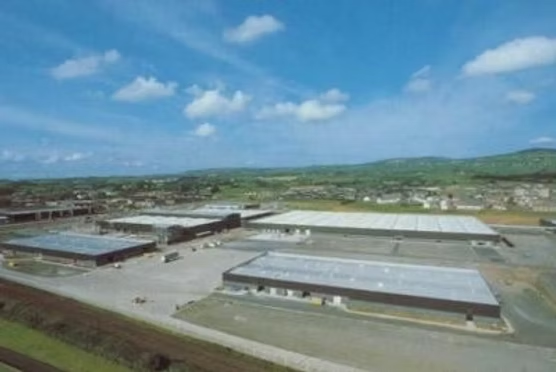
DeLorean again turned to the British government for additional funding, but ran up against a major obstacle, Margaret Thatcher, the Iron Lady. Elected on 3 May 1979 as British Prime Minister, Margaret Thatcher did not approve of the agreement reached between the Labour Party and the Americans. She disapproves of any government investment in what she considers to be a private industry. Funding is frozen by the government and DeLorean is left alone. By happy coincidence, an urban riot linked to the political conflict breaks out near the factory, causing a fire and the destruction of one of DeLorean's buildings. To avoid further disputes and accusations of preventing workers from earning a living, the British government is paying £14 million in compensation. John Z. DeLorean is delighted: he succeeded in making the Iron Lady fall, and recovered 14 million pounds for damage estimated at only 400,000 pounds.
The DeLorean DMC-12 was wanted at the beginning of 1981. Initially scheduled for the end of 1979, it was eagerly awaited by American dealerships who were beginning to threaten DeLorean. The first copy left the Belfast factory in January 1981. The first deliveries are intended for opinion leaders and American dealerships. Overall, the DeLorean has a design that is more than appreciated by critics. Its cabin offers a rather luxurious atmosphere: the interior is entirely covered in black leather, or gray leather for some models, and has an elegant presentation. The driving position is low but easily adjustable, the standard equipment is more than complete for a car of this price, and the materials are of good quality. Leather, electric windows and mirrors, central locking, air conditioning and car radio accompany the driver at no extra cost. But let's talk about prices, or rather increases. Originally scheduled to sell for $12,000, as the “12” in DMC-12 suggests, the DeLorean sold for over $20,000, enough to make customers cringe. Despite this, some dealerships are struggling to meet demand, with the DeLorean doing very well when it was released. This success did not last long, especially after several attempts by journalists, during which it was impossible for them to get out of the car, the door being blocked.
On the mechanical side, the V6 PRV engine has a hard time seducing. With only 130 horsepower, it does not offer customers the sports car they expect. Performance is disappointing, handling is poor, and safety and fuel economy have taken a back seat. This observation, relayed by the American press, coincides with a period of recession in the country which is hampering sales, as well as with numerous design flaws. Quality control is applied upon arrival of DeLorean DMC-12s in the United States to avoid any defect. The DeLorean's reputation suffered greatly. The design problems are explained in part by the lack of skills of a workforce that is completely inexperienced in car manufacturing. Delays and financial problems prevent DeLorean from training his teams and the cars are directly paying the price.
The financial forecasts are clear. To achieve profitability, DeLorean must sell no less than 16,000 cars in the first year. However, at the end of 1981, only 6,500 DeLorean DMC-12s had been sold. The financial crisis is getting worse and the company is in a corner, with a debt of more than 175 million dollars. To save the company, John Z. DeLorean set up a restructuring project at the beginning of 1982, aimed at listing the company on the stock exchange under the name of DeLorean Motors Holding Company. The proposed shares would then have allowed John Z. DeLorean, as the majority shareholder, to personally enrich himself by approximately $120 million. Those who only own a few shares, such as car dealerships, received almost nothing. This decision was very poorly received by the British government and by Margaret Thatcher. Scandalized, she put an end to all investments in American society and placed the Belfast factory under receivership.


The end of DeLorean then seems inevitable. A surge of hope emerged after a report in the Washington Post, indicating that an American group, led by the financier Jeanne Farnan, had raised funds for the company. They would have found investors ready to contribute 10 million dollars as part of a financial package. The loan document was sent to John Z. DeLorean on the morning of October 19, 1982, the last day for the company to obtain new financing or go into liquidation. John Z. DeLorean never signs the documents, and with good reason, Farnan being the subject of a criminal investigation by the FBI and the U.S. Attorney's Office in Washington. DeLorean already has a plan in mind. The factory was nevertheless definitively closed in the following days, to the great surprise of Barrie Wills. The situation was certainly complex, but the decision was surprisingly quick. The reason for the closure was announced the following morning to the BBC. A special flash reports that DeLorean was arrested as part of an FBI stunt, during which he allegedly agreed to sell 220 pounds of cocaine, worth an estimated $24 million. The whole team and Barrie Wills were blown away.
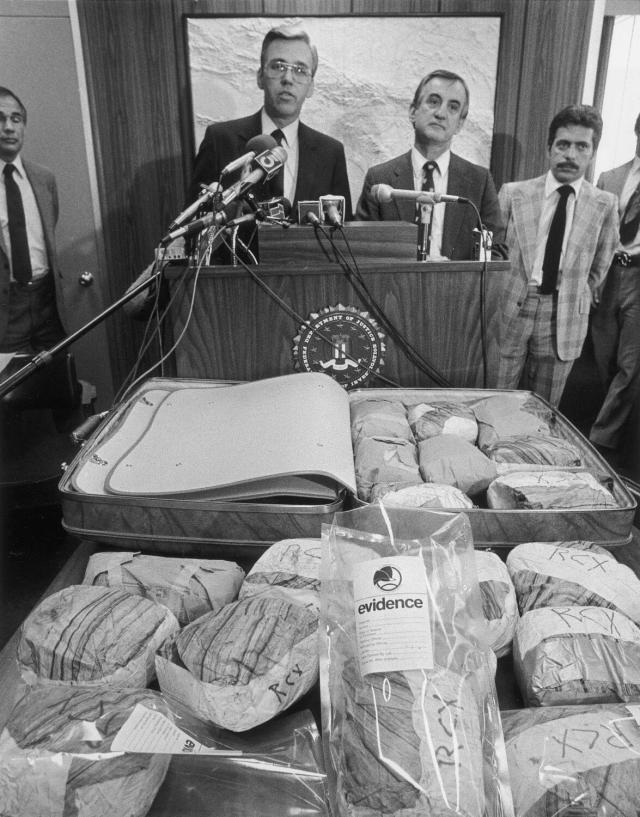
His arrest by the FBI still seemed implausible a few hours earlier. DeLorean, during the previous evening, was in the middle of negotiations with alleged bankers to raise the millions needed for the company to survive. During a date to close the deal in a hotel room in Los Angeles, he is seduced by the prospect of making even more money by engaging in cocaine trafficking. His interlocutors, undercover agents, opened a suitcase full of cocaine for him and indicated a value of more than 4 million dollars. DeLorean's reaction, financially cornered, led to his arrest: “It's pure gold... gold weighs more than that, for God's sake.” FBI agents handcuff him, and DeLorean is accused of drug trafficking.
During his trial, DeLorean's lawyer, Howard Weitzman, alleged that the FBI managed to trick the automaker because he knew that the automaker would do anything to save his business. The offer, suggested by a paid FBI informant, was not said to have been paid for by DeLorean. A deal is then concluded between the two men: the financing of the offer is arranged, but DeLorean must put his company as collateral. In the same way as launching his business, DeLorean does not invest a cent of his own money in the business. The government then considers that the simple fact of having agreed to transfer control of its business constitutes tangible proof of its willingness to participate. But by a trick, DeLorean deceives the FBI by entrusting them with control, not of the DeLorean Motor Company, but of DMC.Inc., a dormant shell company with no assets. His financial participation in drug trafficking is therefore not proven, despite all the filmed evidence. After less than thirty hours of deliberation, DeLorean was acquitted of all charges.

However, his problems with the law have only just begun. John Z. DeLorean is being sued for embezzlement and fraud by federal prosecutors, and is being investigated by British authorities. The government discovers that DeLorean produced only 8,500 cars and that the equivalent of 23 million pounds, a large portion of the funds received, was transferred to a Panamanian account in the name of General Product Development Services, the company intended to subsidize Lotus. The FBI joined the investigation, but did not have time to interview Colin Chapman, who died abruptly on December 16, 1982. The judges in Belfast would later say that his presence in the dock would have earned him ten years in prison. John Z. DeLorean was never convicted.
Now alone after the departure of his wife and children, Kathryn and Zachary, DeLorean is financially cornered and sells his house in New Jersey, where his estate is finally purchased by a certain Donald Trump.
After the fall of John Z. DeLorean in the wake of the drug trafficking scandal, the brand and the factory did not recover. The 2,500 employees are laid off and the DeLorean Motor Company liquidated. The factory slowed down from February to May 1982, before shutting down. A few months later, Consolidated International bought the unsold cars and those partially built, recalled some workers and produced the latest models, the 1983 vintage. The factory produces some 276 additional DeLoreans.
Originally planned for 25,000 copies, production of the DeLorean did not exceed 9,000. As a result, a large number of parts are still available. The stock of parts was sent to Ohio to be purchased by Kapac, which then provided the five-year manufacturer's warranty. The DeLorean's commercial history ended in a bitter failure and its image, both because of its reliability concerns and because of the setbacks of John Z. DeLorean, was at an all-time low.

As the DeLorean DMC-12 falls into oblivion, it suddenly reappears, not on the roads, but on the big screen. Writers Bob Gale and Robert Zemeckis choose DeLorean for their movie “Back to the Future.” With its futuristic design, butterfly doors and stainless steel body, the DeLorean is the perfect car for the Doc. Even more interesting for them, the DeLorean story allows them to use it as they see fit, as the brand has disappeared and the brand image requirements are no longer relevant. DeLorean is becoming a real star, much more than she has ever been before. Following the success of the first movie, Robert Zemeckis received thanks from John Z. DeLorean for “perpetuating his dream.”
Now cult and integrated into pop culture, DeLorean has seen its coat of arms restored. The entire stock of parts was purchased by the DeLorean Motors Company of Texas, created in 1997, allowing the legend to continue.
DeLorean died on March 19, 2005, at Overlook Hospital in Summit, New Jersey, from a stroke. He was 80 and lived in a one-bedroom flat in Bedminster with his fourth wife, Sally.
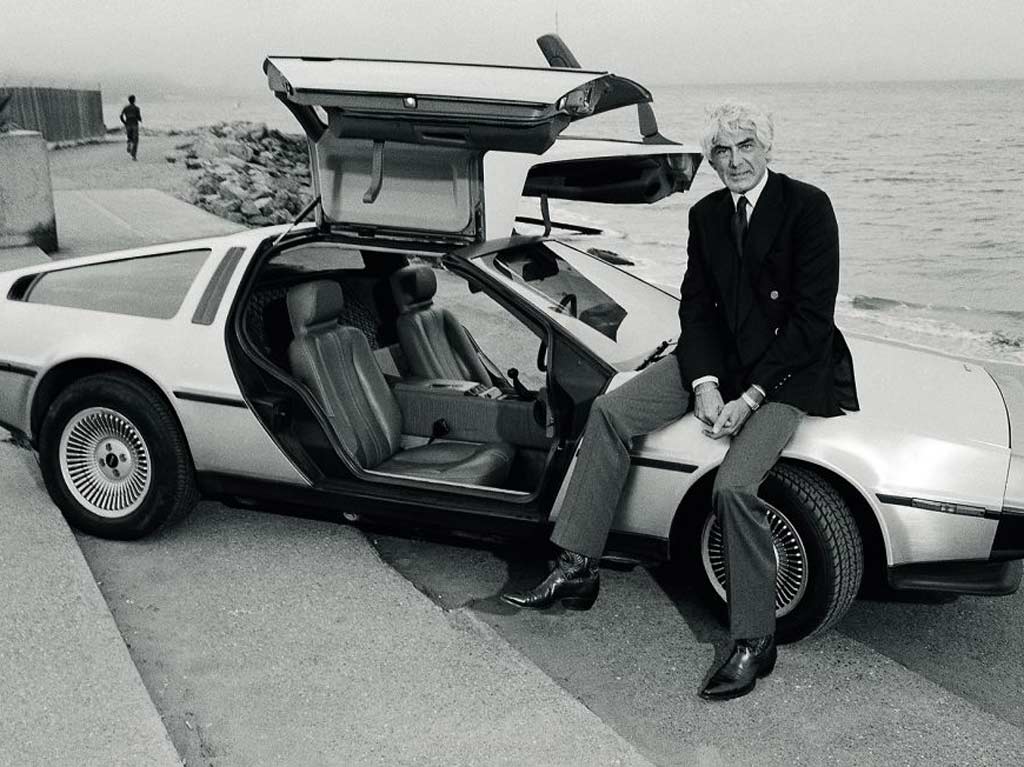
His tomb is decorated with a DeLorean DMC-12 with its doors wide open, as a symbol paying tribute to the project of a lifetime.
.jpg)
Let's talk about your car, our team is listening.