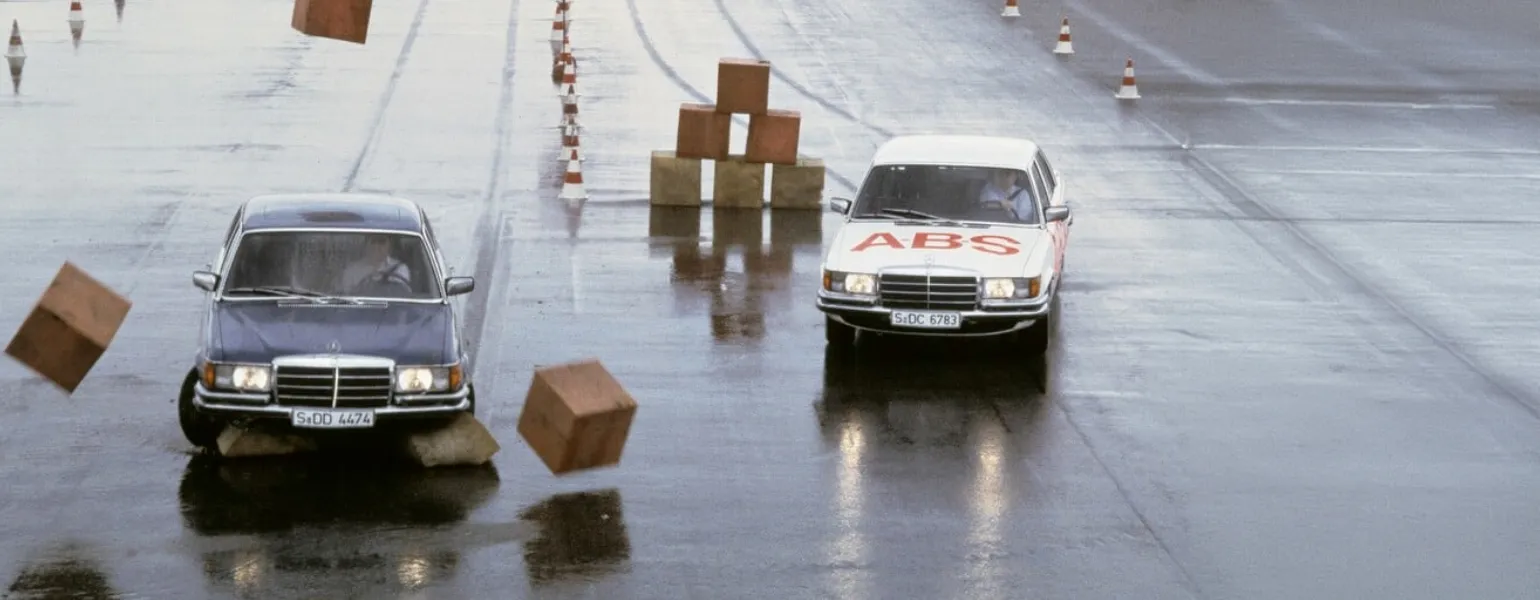
Despite significant progress, such as the adoption of disc brakes by Jaguar and Citroën in the mid-1950s, braking remained a problem. Wheels locked, a car turns into a sledge out of control. The AntiBlockierSystem or ABS, delivered by Bosch from 1978, electronically regulates braking wheel by wheel. Rotation sensors inform the ABS control unit when a wheel is locked. The pressure is released for a fraction of a second on this single wheel and then immediately reapplied. Braking is thus exploited at the limit of blocking and the steering remains operational.
At the time, the sector was populated by tiny structures, passionate, admittedly, but unable to meet the expectations of a modern owner. For us, maintaining a car is more than just an oil can or maintaining the load. It means understanding its market value, anticipating its mechanical weaknesses, insuring it, reselling it, looking for the next one, in short: digitizing the soul of your vehicles to predict the unpredictable.
Ten years after the arrival of the Huracán, Lamborghini is opening a new chapter. The naturally aspirated V10 bows out and gives way to a completely new mechanism: a hybrid twin-turbo V8, developed entirely by Sant'Agata. His name, Temerario, summarizes this transition well. Bold, assertive, and looking to the future.
The car is constantly evolving. If you think of supercars, from the Lamborghini Miura to the McLaren P1, you imagine pure speed, the roar of the engines and the sculpted lines for aerodynamics. However, another movement, more discreet but just as powerful, has changed the world of performance: the rise of sporty SUVs.
Didn't find the answer you were looking for?
Contact us, and an expert will respond promptly.