
Le coin des experts
Since its creation, Bugatti has been one of these key brands in the automotive world. And although the path has not always been the easiest, it is clear that the brand is doing at its best. So much so that a new program, parallel to classical production (and yet already so elitist), is emerging: Solitaire. A unique model produced according to the request of a customer, infinite customization and a breathtaking result. After the Bugatti Brouillard, here is the Bugatti F.K.P. Hommage. But let's go back a few decades to understand its origin.
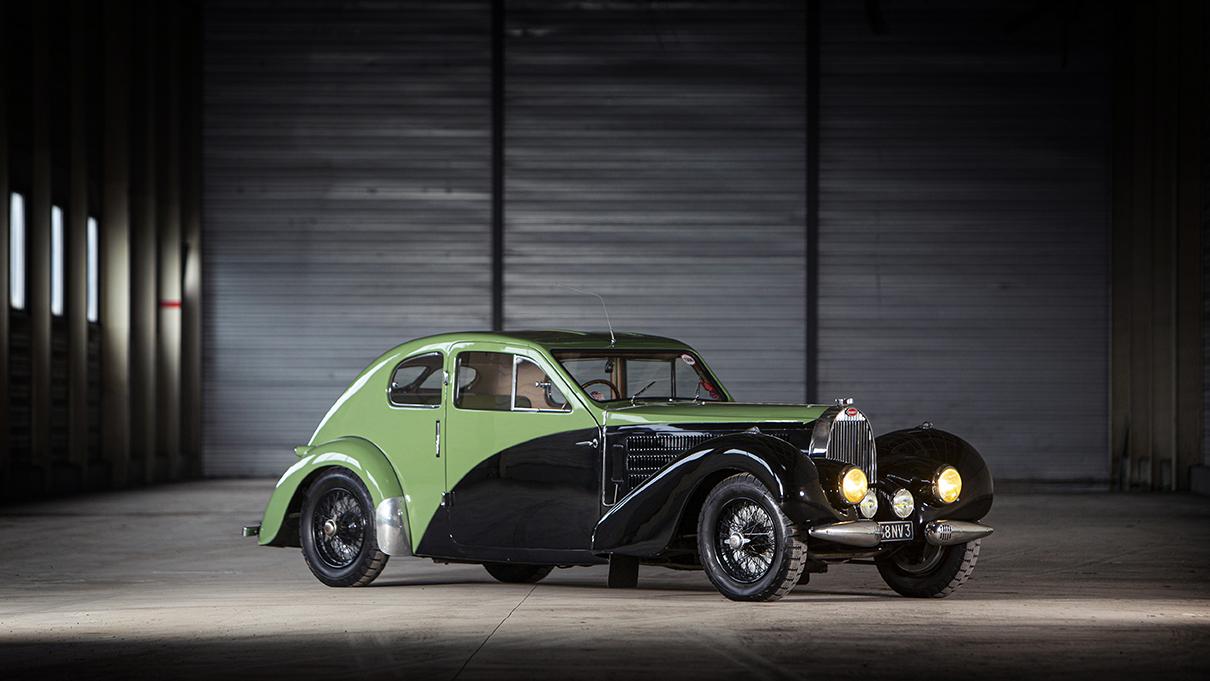
Founded in 1909 by Ettore Bugatti, the brand is considered a pioneer in the automotive field. His first cars, from the Type 13 to the Type 35, proved to be exceptionally well produced and devilishly effective in competition. Successes followed one another and the brand outrageously dominated many races. But Bugatti doesn't just make competitive cars. Through the Type 50, 55 and 57, Bugatti aesthetics became a pillar of the brand's success. However, the Second World War did not spare him, Bugatti wavered and had to diversify its offer. With the death of Ettore Bugatti in 1947, the brand was struggling to catch a glimpse of the light of day and did not convince with sub-standard models.
It was in 1987 that the brand reappeared under its original name. Acquired by the Italian entrepreneur Romano Artioli, a factory was built near Modena and a new model was being prepared. Paolo Stanzani, designer of the Miura and Countach for Lamborghini, presented a coupe with a central rear V12 engine on September 15, 1991, the 110th anniversary of the birth of Ettore Bugatti. The EB110 marks the return of Bugatti to the forefront. But in 1995, the bankruptcy of Romano Artioli condemned the brand, which was bought three years later by the Volkswagen group, then managed by a certain... Ferdinand Piëch.

One of the most influential in the automotive industry, Ferdinand Piëch was at the head of the Volkswagen group as early as 1993. His successes at Porsche and Audi are not trivial, and his expertise at the head of the group is essential after a complex period. Since its beginnings in the automotive world, its desire has been unchanged: to be able to push technological boundaries, with a vehicle capable of generating more than 1,000 horsepower and reaching 400 km/h, while maintaining the practicality of luxury grand tourism. In search of a car brand capable of realizing its dream for several years, Bugatti's situation then presented itself as a sign of destiny.
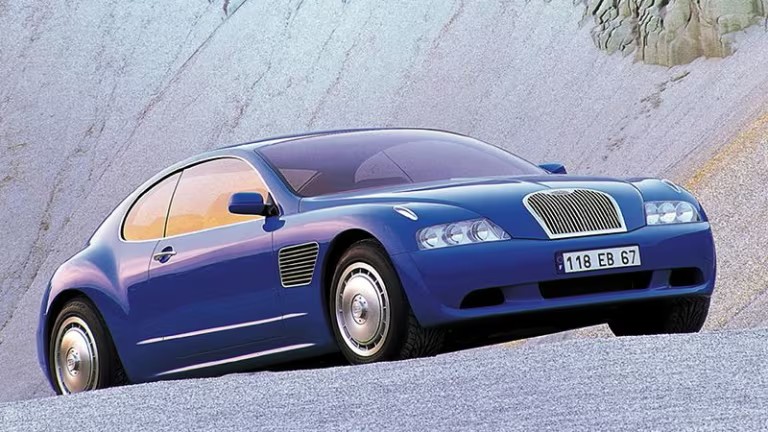
His first steps with Bugatti were dedicated to one of his inventions, an 18-cylinder engine, invented in 1997 during a trip to Tokyo. He entrusts Giorgetto Giugiaro, Italdesign designer and friend, with the task of developing a concept faithful to his vision. The result was the Bugatti EB 118, presented at the Paris Motor Show in 1998. Since the project had such potential, a second model was presented the following year, a luxury hatchback named EB 218. Next will come the EB 18/3 Chiron and EB 18/4 Veyron, prefigurations of the production model and significant refinements of the project.
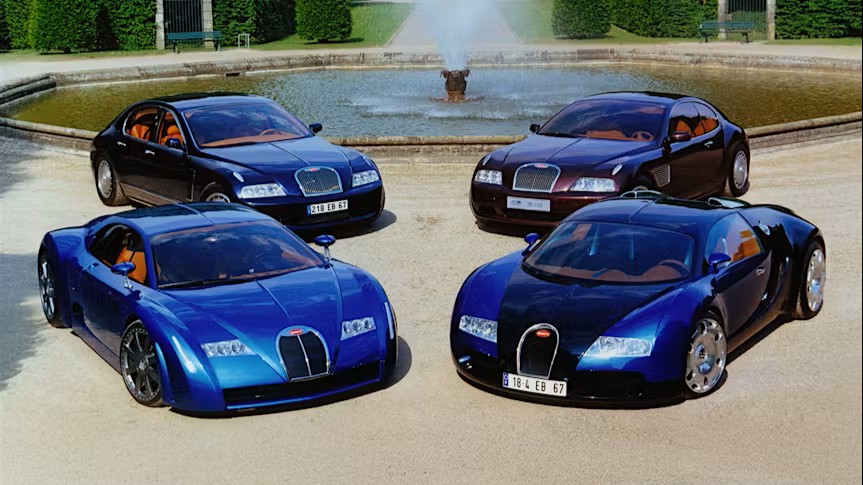
In 2000, Ferdinand Piëch officially announced that Bugatti would build a production model developing 1,001 horsepower, capable of exceeding 400 km/h. After five years of studies, the whole world is finally discovering the Bugatti Veyron 16.4, the world's fastest production vehicle. But this time, there was no 18-cylinder engine. The Veyron is “satisfied” with a W16, directly inspired by its previous tests. It marks the beginning of a new era and begins the race for power and speed between renowned car manufacturers.
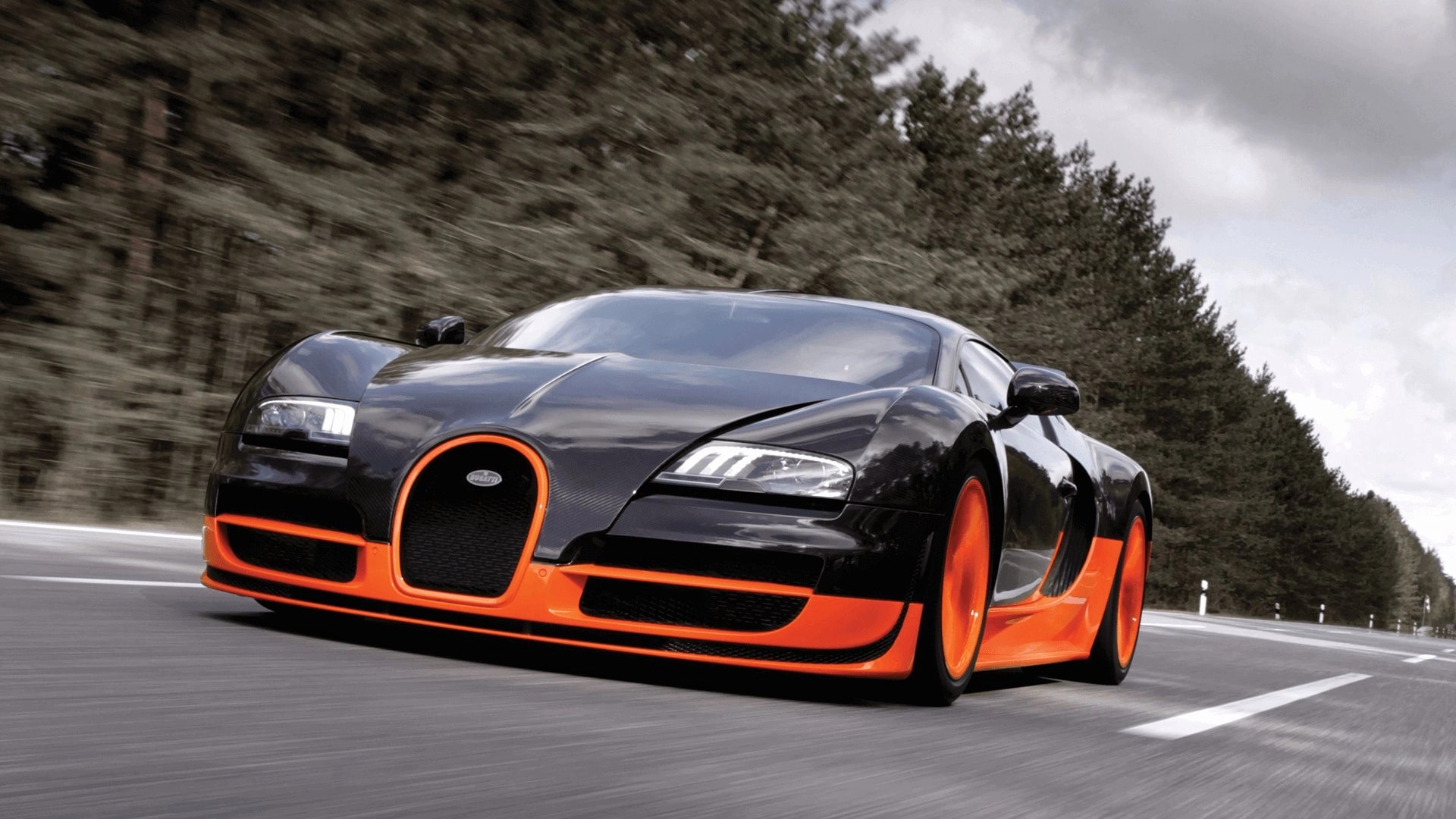
Although it appeared twenty years earlier, the Bugatti Veyron is still a model apart today. And his influence, which made it possible to develop the Bugatti range, is still well remembered. This is demonstrated by the Bugatti F.K.P. Hommage, a spectacular reissue of the Veyron, version 2026. Equipped with the inevitable W16 engine in its latest evolution, the F.K.P. Hommage offers 1,600 horsepower, 599 more than its original version. The performances are just as improved and reach that of the Bugatti Chiron.
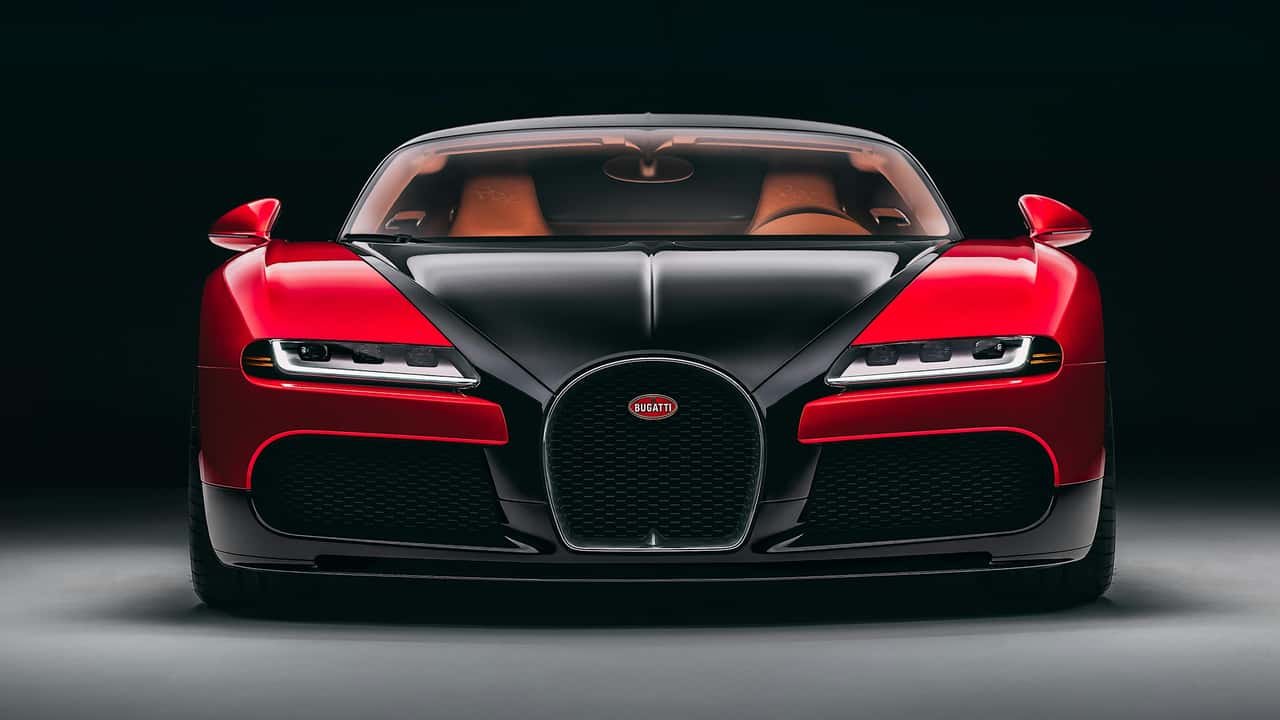
The exterior of the model faithfully follows the lines of the Veyron, with a few subtleties of the most beautiful effect. The solid aluminum horseshoe radiator grill is now fully integrated into the body, abandoning the two-dimensional effect used on the Veyron. The front air intakes are enlarged, the air ducts retained from the original ones and the rims take on another dimension by increasing to 20 and 21 inches. A red and black finish is applied to the body, recalling the original colors of the Veyron.
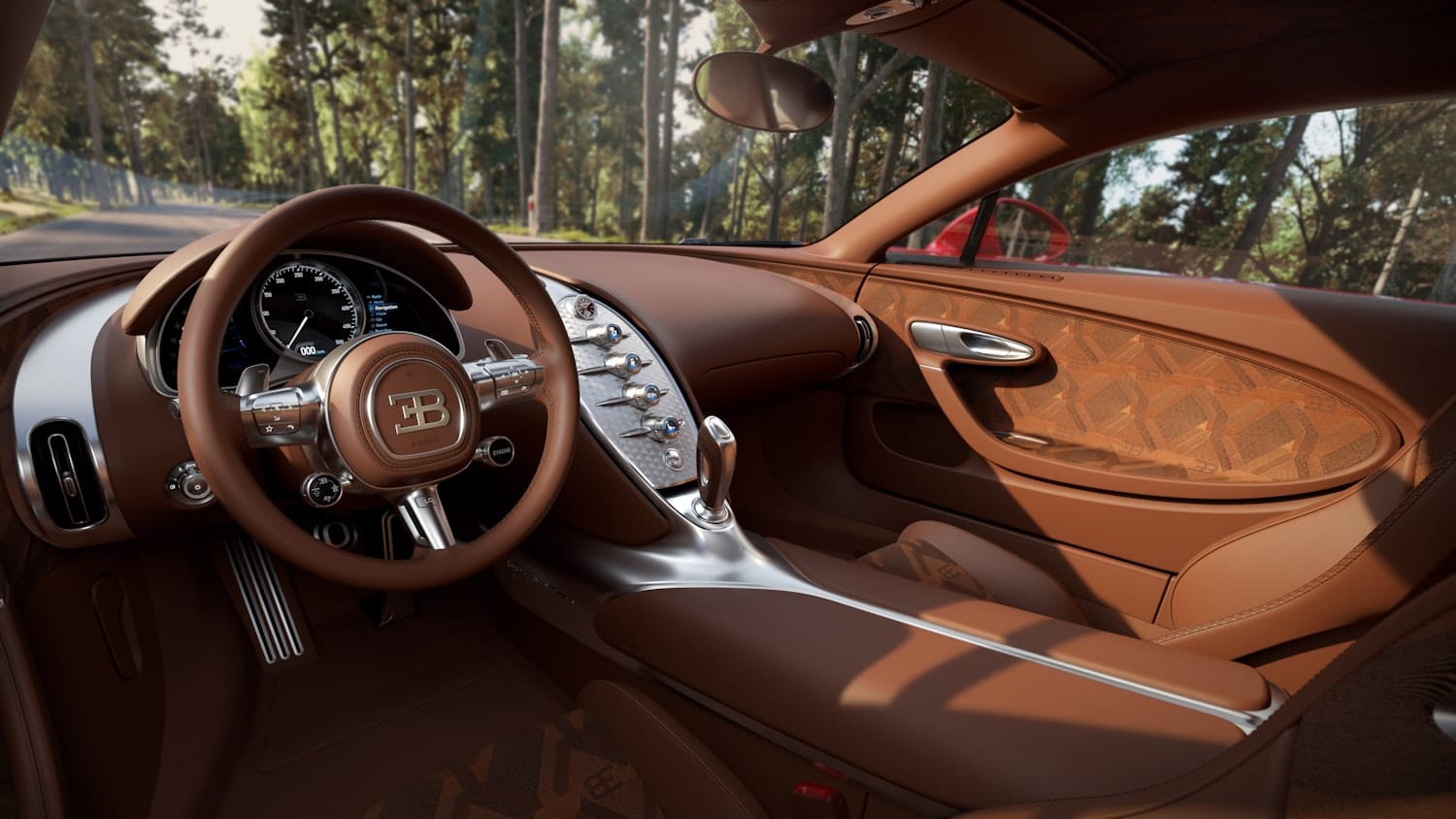
The interior of the F.K.P. Hommage consists of a unique, circular steering wheel inspired by the Bauhaus style, and a fully customized center console, machined from a block of solid aluminum. At the heart of the dashboard is an Audemars Piguet Royal Oak Tourbillon timepiece, an Audemars Piguet Royal Oak Tourbillon timepiece, a 41 mm piece specially created and integrated at the request of the future owner of the F.K.P. Hommage. A true work of art, this new model from the Solitaire program highlights the exclusivity of Bugatti and pays tribute to the Veyron and its creator, Ferdinand Piëch.
.jpg)
Let's talk about your car, our team is listening.